AI influencer niche ideas
A niche is the one topic your AI influencer posts about and the audience that follows it. The niches that suit a made-up creator are the ones where showing beats testifying: outfits, trip plans, desk setups, game lore, a language lesson.
The hardest niches are the ones that sell personal results, and fitness tops that list. US rules treat a virtual creator as an endorser. When an ad “represents that the endorser uses the endorsed product”, the endorser must have been “a bona fide user of it” (16 CFR 255.1(c), read 24 October 2026). A character has never used anything.
| Niche | Brands that fit | Rule to watch |
|---|---|---|
| Everyday outfit styling | High-street fashion, marketplaces | Fit and fabric shown truthfully |
| Streetwear and sneakers | Sneaker shops, resale apps | No fake “I copped these” |
| Capsule and occasion wear | Rental and occasion brands | Colours must match the stock |
| Home workouts explained | Fitness apps, home kit | No body-change results |
| Running and gear | Shoe and watch brands | No “I ran in these” claims |
| Desk mobility | Ergonomic furniture, posture apps | No health claims |
| Morning routines and planning | Planner, notes and calendar apps | Product demos stay real |
| Small-flat home styling | Furniture, décor marketplaces | Real product dimensions |
| Pet character | Pet food, toys, insurance | No “my vet said” lines |
| Destination guides | Tourism boards, booking apps | Never claim a visit |
| Budget trip planning | Airlines, eSIM, travel cards | Prices dated and real |
| AI tools explained | AI apps and software | Screen demos of the real app |
| Desk setups and gadgets | Peripherals, lighting, monitors | Real specs, real footage |
| Recipe host | Kitchenware, meal kits, grocery | The dish is cookable |
| Local food guide | Restaurants, delivery apps | No fake reviews |
| Game lore and news | Publishers, gaming chairs | Platform AI labels |
| Virtual streamer persona | Peripherals, energy drinks | Platform AI labels |
| Language teacher | Language apps, tutoring sites | Correct lessons |
| Science explainer | Edtech and publishers | Every fact sourced |
| Local business mascot | The business itself | Clear AI disclosure |
Scroll sideways for all 3 columns

Why the niche matters more for an AI influencer
A human creator can try a product and say so. An AI influencer can only show it. That one difference sorts every niche on this page.
The FTC’s Endorsement Guides define an endorser as someone who “could be or appear to be an individual, group, or institution” (255.0(b)). A virtual creator looks like an individual to its followers, so the rules reach its posts. Section 255.1(c) then requires a bona fide user whenever the ad “represents that the endorser uses the endorsed product”.
The FTC’s 2024 rule on fake reviews goes further. It bans testimonials that “misrepresent that they are by someone who does not exist, such as AI-generated fake reviews”, and lets the agency seek civil penalties (FTC, 14 August 2024).
The format that holds up teaches or styles without testifying. The character shows how to style a jacket, demonstrates a squat or walks through a screen recording of an app. It never claims to own the product, use it or get results from it: no “I live in these”, no “I lost 6 kilos”.
When a brand supplies a garment for a styled look, present it as the brand’s product styled on an AI character. The character’s own wardrobe stays out of the caption. The full picture on labels and laws: is an AI influencer legal?
AI fashion influencer ideas
Fashion fits an AI influencer because the post is the styling: how a piece is cut and layered. The character shows the look and the product page holds the facts. H&M works this way: it announced digital twins of 30 real models for social posts and campaigns in March 2025 (FashionUnited).
Everyday outfit styling
One character, one wardrobe, five ways to wear it. The post is the outfit formula, so the styling matters more than the face.
- Three outfits from one pair of jeans
- What to wear to a job interview, by dress code
- Same coat, four weather days
The risk is fit. An AI garment drapes the way the model guesses, so check every look against the brand’s own product photos before it runs.
Streetwear and sneakers
Drops, colourways and styling notes suit a character with a strong look and a fixed attitude.
- Five ways to lace and style this week’s release
- Outfit built around one rare colourway
- Resale price check on the month’s hyped pairs
The risk is the “I copped these” post. Your character owns nothing, so frame it as a styling idea.
Capsule and occasion wear
Wedding guest looks, holiday capsules and work wardrobes are planning content.
- A ten-piece holiday capsule
- Wedding guest outfits by season
- One blazer, a week of office looks
The risk is colour. Generated fabric drifts in tone, and a buyer who receives a different shade may return it.
AI fitness influencer ideas
Fitness carries the biggest risk of any group here. The niche sells results, and results are exactly what a character cannot have. Build the niche around teaching the movement and leave the transformation to real customers.
Home workouts explained
A coach character who demonstrates form and counts reps works, as long as the movement on screen is anatomically right.
- A 10-minute no-equipment routine, move by move
- Three common squat mistakes, slowed down
- What to do on a rest day
The risk is the before-and-after. A body that never trained cannot show progress, and a before-and-after implies the character used the product, which 255.1(c) reserves for bona fide users.
Running and gear
Training plans, race-day checklists and kit explainers fit a calm, data-minded runner.
- A first 5K plan in eight weeks
- What goes in a race-day bag
- Shoe drop explained in one minute
The risk is “I ran 20 miles in these”. Show the shoe and its specs, and cite the brand for performance claims.
Desk mobility
Stretches for people who sit all day are short and easy to repeat.
- Five stretches between meetings
- A two-minute wrist routine for keyboard users
- How to set your chair height
The risk is a health claim. “Fixes back pain” needs evidence the character cannot give.
Lifestyle and home
Morning routines and planning
Productivity routines suit a character with a steady daily rhythm, and planner apps fit as sponsors.
- My week planned in 15 minutes
- A Sunday reset checklist
- Three ways to use a notes app as a planner
The risk is the demo. Show the real app interface, recorded from the app, never a generated screen.
Small-flat home styling
Rental-friendly décor and small-space tricks are visual and quick to show.
- Five renter-friendly upgrades under one budget
- A studio flat zoned with two rugs
- Before and after of one shelf
The risk is scale. Generated furniture rarely matches real dimensions, so quote the product page’s measurements.
Pet character
A cartoon or photo-style animal with its own voice suits AI: nobody expects a pet to be human.
- A day in the life, told by the cat
- Which toy suits which chewer, explained by the dog
- Three ways to keep a dog busy on a rainy day
The risk is a borrowed authority line such as “my vet recommends”. Keep health claims to the brand’s own approved wording.
Travel
Destination guides
Itineraries, neighbourhood maps and what-to-pack posts work from public facts.
- Three days in Lisbon on public transport
- Where to stay in Tokyo, by budget
- The five-minute packing list for a city break
The risk is the fake visit. Higgsfield’s terms, section 5.2(xi), bar presenting any output as human-generated when it is not (terms, last updated 23 October 2026). A character “standing” in a café it never saw adds a second problem: followers read it as a real trip. So build the guide from public facts and never claim a visit.
Budget trip planning
Deal-led content suits direct-response advertisers, who pay for clicks and bookings.
- How to fly to Bali for less
- eSIM or roaming: what one week costs
- The cheapest month to visit five cities
The risk is a stale price. Date every fare and link its source.
Tech and AI tools
AI tools explained
An AI character explaining AI tools is on-brand, and software firms fit as sponsors.
- One prompt, four AI image apps, side by side
- How to turn a photo into a short video
- The settings menu nobody reads, explained
The risk is a faked interface. Record the real app.
Desk setups and gadgets
Setup tours and gadget explainers suit a tidy, design-minded persona.
- A desk setup tour on one budget
- Three monitor arms compared by spec
- Cable management in ten minutes
The risk is invented specs. Pull every number from the maker’s page.
Food
Recipe host
A cooking character who talks through recipes works when the food is real or clearly illustrated.
- A 15-minute weeknight pasta
- Meal prep for five lunches
- One pan, three dinners
The risk is a dish that cannot be cooked. Test the recipe with a real cook, or show real food footage.
Local food guide
City food guides suit a character who shares menus and opening hours.
- Brunch menus near one station, compared
- Five dishes to try at a night market
- Five Sunday markets and their opening hours
The risk is the fake review. The FTC rule above bans testimonials by someone who does not exist, so share menus and facts only.
Gaming
Game lore and news
A host character can explain a game’s story and patch notes.
- The whole story of one game in 90 seconds
- This week’s patch notes, explained
- Five hidden details in a new trailer
The risk is the label. Platforms ask for an AI label on synthetic content that is “realistic” (TikTok) or “photorealistic” (Meta): TikTok’s AI label and Meta’s AI disclosure set out when.
How to identify AI content on Meta products
Content with signals that we can identify indicating that it was created with AI will be labelled AI info.
People using Meta products may also be able, and in some cases required, to label their content.
When is a label required? Meta may require an AI label when content has photorealistic video or realistic-sounding audio. This requirement does not apply to images. There may be penalties for content shared without a label when it is required.
Virtual streamer persona
A stylised avatar who reacts to clips and runs polls fits gaming culture, where avatars are normal.
- Reaction to the week’s top clips
- Tier list of a game’s characters
- Viewer poll on the next game to cover
The risk is the same labelling duty, plus a voice that must stay the same across clips.
Education
Language teacher
A friendly teacher character can post short lessons daily, and language apps fit as sponsors.
- Ten phrases for ordering coffee in Spanish
- One grammar rule in 30 seconds
- Words that look alike and mean different things
The risk is a wrong lesson. Have a native speaker check every line.
Science explainer
Short explainers on how things work suit a curious, upbeat persona.
- Why the sky is blue, in one minute
- How a rainbow forms
- What a black hole is
The risk is an unsourced fact. Cite the source in the caption.
Local business
Local business mascot
A shop or a gym can run its own character as a face for posts and ads, with the business as the sponsor.
- Meet the team, told by the mascot
- This week’s offer in 15 seconds
- How to book, step by step
The risk is passing the mascot off as staff or a customer. Say it is an AI character on the profile.
How to pick your AI influencer niche
Run each idea through these checks before you build a face.
- Can the post show the product without the character claiming to use it?
- Do at least five brands in the niche already pay creators?
- Can you make 30 posts from it without repeating yourself?
- Does the format need a real body or a real place? If yes, pick another niche.
- Can one look carry every post? You need the same face every time (consistent AI character).
- Which platform label applies, and are you ready to show it on every post?

Then build the character. Higgsfield’s AI Influencer Studio builds one from 19 menu settings with no prompt, for 1.12 credits (Higgsfield’s launch post, 3 October 2026).
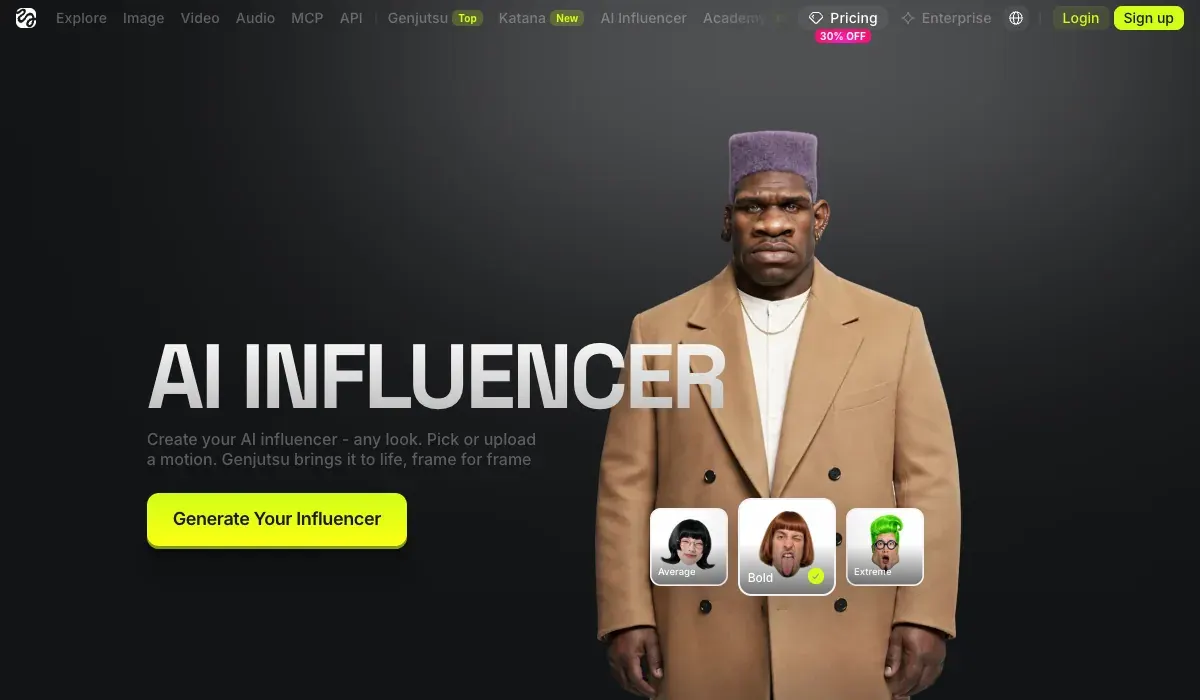
Its Genjutsu motion tab can also swap one object, such as the outfit, in a recorded clip. That is the fashion niche’s shortcut: one performance, many products. The walkthrough: Higgsfield AI Influencer Studio.

For product stills, Nano Banana in the Gemini app takes several reference images and keeps one person’s look across them (Gemini Apps Help). What each niche can earn: make money with an AI influencer. Every tool and route: the AI influencer hub.
Questions about AI influencer niches
What is the best AI influencer niche?
The best fit is a niche where the character teaches or shows without testifying, such as fashion styling, AI tools explained or language lessons. None of them needs a claim of use or results. US endorsement rules reserve those for bona fide users (16 CFR 255.1(c)).
Can an AI fitness influencer work?
Yes, as a coach who teaches movement. It cannot show a transformation or claim to use a supplement: US endorsement rules require a bona fide user for that (16 CFR 255.1(c)).
Do I have to say my influencer is AI?
On TikTok and Meta, yes for synthetic content that is “realistic” (TikTok) or “photorealistic” (Meta): TikTok’s AI label and Meta’s AI disclosure set out when. Higgsfield’s terms also bar presenting any output as human-generated (5.2(xi)).
Next on Higgsfield: AI content ideas for TikTok
Sources
- US Federal Trade Commission (eCFR): 16 CFR Part 255, Guides Concerning Use of Endorsements and Testimonials in Advertising, 255.0(b): the endorser can be an individual, group or institution, real or seeming; 255.1(c): when the ad represents that the endorser uses the endorsed product, the endorser must have been a bona fide user of it. Checked
- US Federal Trade Commission: Federal Trade Commission announces final rule banning fake reviews and testimonials, 14 August 2024: bans reviews and testimonials by someone who does not exist, such as AI-generated fake reviews; civil penalties for knowing violators. Checked
- Higgsfield: Introducing the New AI Influencer: How It Works and What You Can Create, Published 3 October 2026: 19 builder settings, 1.12 credits a character, Genjutsu motion transfer and object swap, five listed use cases. Checked
- Higgsfield: Higgsfield Terms of Use (23 October 2026), Last updated 23 October 2026; 5.2(xi): no representing that any output is human-generated when it is not. Checked
- Gemini Apps Help: Generate and edit images with Gemini Apps, Nano Banana 2 accepts multiple reference images and keeps the look of a person across images. Checked
- FashionUnited: H&M to create twins of models with AI, 28 March 2025: digital twins of 30 real models for social posts and campaigns, made with Uncut. Checked

Alexandre S.
Alexandre S. is a creative ad strategist and copywriter with ten years' experience in digital marketing across multiple channels.
Related pages
-
 Guide What is an AI influencer?
An AI influencer is a made-up creator whose face and videos come from AI tools, run by an agency, a brand or one person. How they work and get labelled.
-
 Guide AI influencer marketing
Two ways brands run AI influencer campaigns, renting a character or building one, with named campaigns, monthly tool costs and label rules. 24 October 2026.
-
 Data AI influencer earnings
12 published earnings figures for six virtual influencers, from Lu do Magalu to Aitana López, each with its outlet and who produced it. Checked 24 Oct 2026.
-
 Guide AI influencer prompts
A five-part formula and 17 copy-ready prompts for one AI influencer: the base face, 12 photo-set shots and 4 video clips, with per-tool notes.


