What is an AI influencer?
An AI influencer is a social media personality who does not exist. Software makes every picture and clip, and a person or company runs the account.
The older name is virtual influencer. It covers the same idea, but most of the famous ones were 3D characters built by hand, years before today’s image models.

Virtual influencer vs AI influencer
Both are made-up people. The difference is how the pictures get made, and what that costs.
Lil Miquela started the first wave. Her first Instagram post went up on 23 April 2016, built by Trevor McFedries and Sara DeCou through their startup Brud. Two years later Time named her one of the 25 most influential people on the internet.

Imma, from the Tokyo startup Aww Inc., belongs to the same wave. Bloomberg described her in 2020 as a computer-generated face composited onto photos of a real model.
The second wave needs no 3D team. Granny Spills, a sharp-tongued AI grandmother, comes from two creators at Blur Studios. TIME reported on 18 November 2025 that they draft scripts with Claude and make the clips in Veo 3, Sora 2 and Seedance. One video takes them 5 to 10 minutes.
| Question | Virtual influencer (3D era) | AI influencer (today) |
|---|---|---|
| How the face is made | A 3D model or a composited face | An image model, from a prompt or menus |
| Who makes it | A studio with 3D artists | Often one person with a subscription |
| Famous examples | Lil Miquela (2016), Imma (2018) | Aitana Lopez, Granny Spills |
| Looks like | Often stylised, sometimes cartoon | Usually photo-real |
Scroll sideways for all 3 columns
Today “virtual influencer” usually means a CGI character, and “AI influencer” a photo-real account made with generative tools.
Who runs AI influencers?
Three kinds of owner sit behind the accounts.
Agencies build a character to sell to brands. Rubén Cruz’s agency The Clueless in Barcelona made Aitana Lopez after campaigns kept stalling over human models. He told Euronews the point was to stop relying on “other people who have egos”.
Brands build one as a mascot that talks. Lu do Magalu speaks for the Brazilian retailer Magazine Luiza. HypeAuditor’s 2024 ranking put her second among virtual accounts on Instagram, with more than 7.1 million followers (Meio & Mensagem, 12 November 2024).
Solo creators and two-person studios are the newest group. Milla Sofia comes from an anonymous creator in Finland. She was made as the face of a Finnish online shop’s ad campaign (MediaPost, 2 August 2023). The two creators at Blur Studios run several characters at once, Granny Spills among them.
The famous AI influencers list names 13 of them, with each follower count’s source and date.
How is an AI influencer made?
You make one in four steps: design a face, lock it, make a photo set, then animate the best shots.
You design the face with an image model, such as Nano Banana, or with a character builder. You lock that face with a trained identity or a set of reference images. A face that changes between posts gives the character away: how to keep an AI character consistent compares the methods.
Then you make a first set of photos, and you turn the best ones into short videos with a video model such as Kling.
Higgsfield’s AI Influencer builder makes a character from 19 menu settings and returns a close-up portrait and a full-body shot for 1.12 credits.
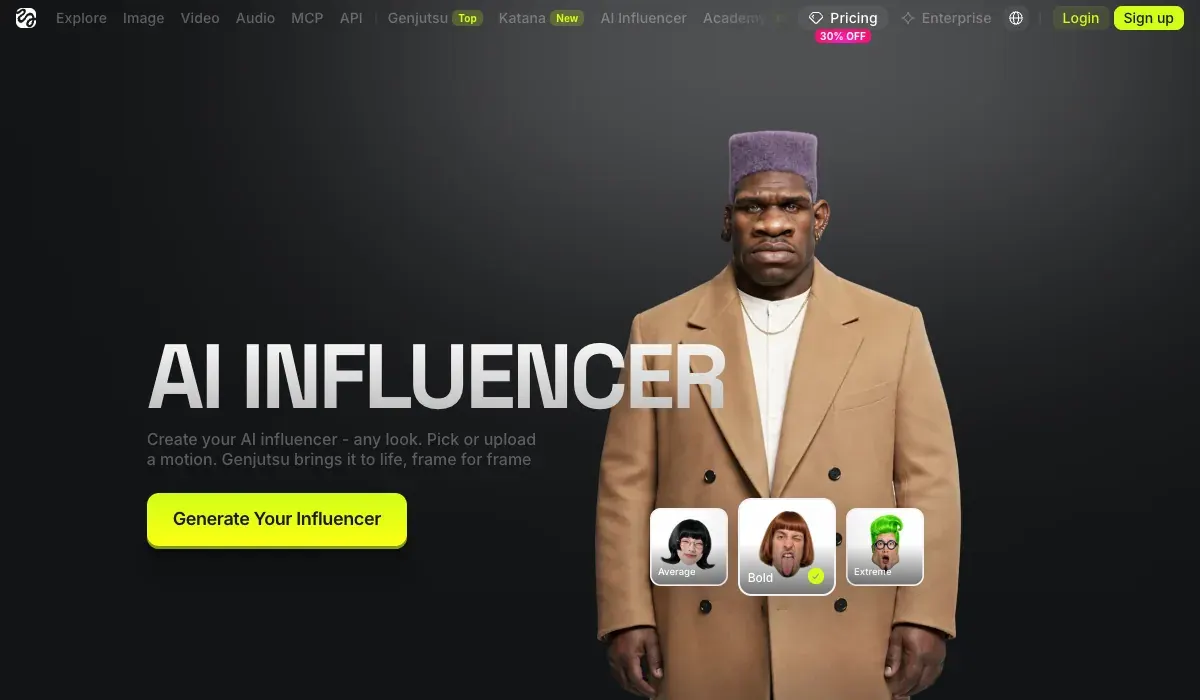
The Higgsfield AI Influencer Studio guide walks through each screen. The AI influencer hub covers the whole route, with the tools for each step and what a month costs. In the video below, a creator builds and fixes a character in Higgsfield’s Influencer Studio.

Where AI influencers post
Instagram takes a single still photo as a post, so a new character can start there with images alone. TikTok and YouTube Shorts run on video, so every post needs a clip. Granny Spills began on both TikTok and Instagram (TIME, 18 November 2025).
Platforms do not always reward them. TIME reports that TikTok flagged Granny Spills’ videos as “unoriginal” and removed them from its “Creator Rewards Program”. Her creators say they plan to earn through Facebook, YouTube and Cameo instead.
How platforms label AI influencers
Meta and TikTok both label photo-real AI video, with different rules for stills.
Meta’s help page says content carrying AI signals gets an “AI info” label on Facebook, Instagram and Threads. Meta “may require an AI label when content has photorealistic video or realistic-sounding audio”. The page adds that the duty “does not apply to images”.
How to identify AI content on Meta products
Content with signals that we can identify indicating that it was created with AI will be labelled AI info.
People using Meta products may also be able, and in some cases required, to label their content.
When is a label required? Meta may require an AI label when content has photorealistic video or realistic-sounding audio. This requirement does not apply to images. There may be penalties for content shared without a label when it is required.
TikTok’s Community Guidelines require a label on AI content showing “realistic-looking scenes or people”. You can use TikTok’s own AI-generated label or “a clear caption, sticker, or watermark”. TikTok’s AI label rules cover ads too, and Meta’s AI disclosure rules cover paid posts. Laws on synthetic people are on is an AI influencer legal?
How AI influencers make money
The same way human creators do: sponsored posts, brand ambassador deals, platform payouts and selling their own products. Aitana Lopez’s creators told Euronews she can earn up to 10,000 euros in a month, with about 3,000 in a typical one.
Brand deals are falling: TIME cites a Business Insider finding that brand partnerships with AI accounts fell 30 per cent on 2024. The AI influencer earnings data collects the published figures, and how to make money with an AI influencer sets out each income route.
If you are a marketer looking to hire one, start with AI influencer marketing.
Questions about AI influencers
Are AI influencers real people?
No. The face and body are generated or modelled, and a person or company writes the captions and replies to comments.
Who was the first AI influencer?
Lil Miquela, a CGI character, posted first on 23 April 2016 and is the usual starting point. Her team built her as a 3D model; today’s photo-real accounts come from image models instead.
Can anyone make an AI influencer?
Yes. A character builder works from menu settings, so it needs no drawing skills, and one person can run the account. Keeping the face consistent and labelling the posts are the two jobs that take care.
Next on Higgsfield: AI Influencer Studio
Sources
- TIME: This AI Grandma Is Going Viral. Is She the Future of Influencing? (18 November 2025), Granny Spills by Blur Studios: about 400,000 TikTok and 1 million Instagram followers in her first weeks; scripts drafted with Claude, clips made in Veo 3, Sora 2 and Seedance; TikTok removed the videos from its Creator Rewards Program as unoriginal; Business Insider found brand partnerships with AI accounts down 30 per cent on 2024. Checked
- Wikipedia: Miquela, First Instagram post 23 April 2016, built by Trevor McFedries and Sara DeCou through the startup Brud; named one of Time’s 25 most influential people on the internet in June 2018. Checked
- Bloomberg: Virtual Star of Porsche Ads Gets Real Venture Backing (3 September 2020), Imma, made by Tokyo startup Aww Inc. in 2018: a computer-generated face composited onto photos of a real model; Porsche and IKEA work; 1 million dollar seed round. Checked
- Euronews: Meet the first Spanish AI model earning up to 10,000 euros per month (22 November 2023, updated 27 December 2024), Aitana Lopez, built by the Barcelona agency The Clueless after campaigns stalled on human models; up to 10,000 euros a month by her creators’ account, about 3,000 on average. Checked
- Higgsfield: AI Influencer, Dated 3 October 2026: 19 menu settings, optional photo of yourself or someone who consents, a portrait and a full-body shot per run, 1.12 credits a character, motion transfer from a 4 to 30 second reference clip. Checked
- Meta: How to identify AI content on Meta products, Content with AI signals is labelled AI info; a label may be required for photorealistic video or realistic-sounding audio; the page says this does not apply to images. Checked
- Meio & Mensagem: Lu do Magalu perde posto de influenciadora virtual mais seguida (12 November 2024), HypeAuditor’s 2024 ranking: Nobody Sausage first on Instagram with more than 7.9 million followers, Lu do Magalu second with more than 7.1 million. Checked
- TikTok: Integrity and authenticity, Community Guidelines, AI content showing realistic-looking scenes or people must carry the AIGC label or a clear caption, sticker or watermark. Checked
- MediaPost: Milla Sofia creator believes age of AI virtual influencers upon us (2 August 2023), Milla Sofia’s anonymous creator in Finland; made as the face of an ad campaign for a Finnish online store. Checked

Alexandre S.
Alexandre S. is a creative ad strategist and copywriter with ten years' experience in digital marketing across multiple channels.
Related pages
-
 Best list Best AI influencer generators
Eight AI influencer generators compared by job, from building a face to keeping it the same in video, with entry prices, free-plan limits and commercial terms.
-
 Guide AI influencer vs real influencer
What a real influencer’s post costs next to an AI character, what surveys find on trust, and the labels each one needs. Checked 24 October 2026.
-
 Guide AI influencer niche ideas
20 AI influencer niches with the brands that fit each, three post ideas apiece and the one rule that trips each niche. Read 24 October 2026.
-
 Guide AI influencer prompts
A five-part formula and 17 copy-ready prompts for one AI influencer: the base face, 12 photo-set shots and 4 video clips, with per-tool notes.


