UGC ads: what they are and how brands run them
A UGC ad is a paid ad made from footage a customer or creator filmed. It runs from the brand’s ad account or the creator’s. Before it runs, it needs three permissions: the creator’s usage licence, the platform’s authorisation and a disclosure.
| Kind | Who films | Who is paid | What the brand needs first | How it runs |
|---|---|---|---|---|
| Organic UGC | A customer, unprompted | Nobody | The poster’s permission to reuse it | On the poster’s account |
| UGC ad | A customer or a paid creator | The creator, in cash or product | A usage licence, the platform authorisation, a disclosure | As a partnership ad or Spark Ad, or uploaded by the brand |
| AI UGC ad | Nobody: an AI presenter | The tool vendor | A plan whose terms allow paid ads, and the AI label | Uploaded by the brand |
Scroll sideways for all 5 columns
What makes an ad a UGC ad
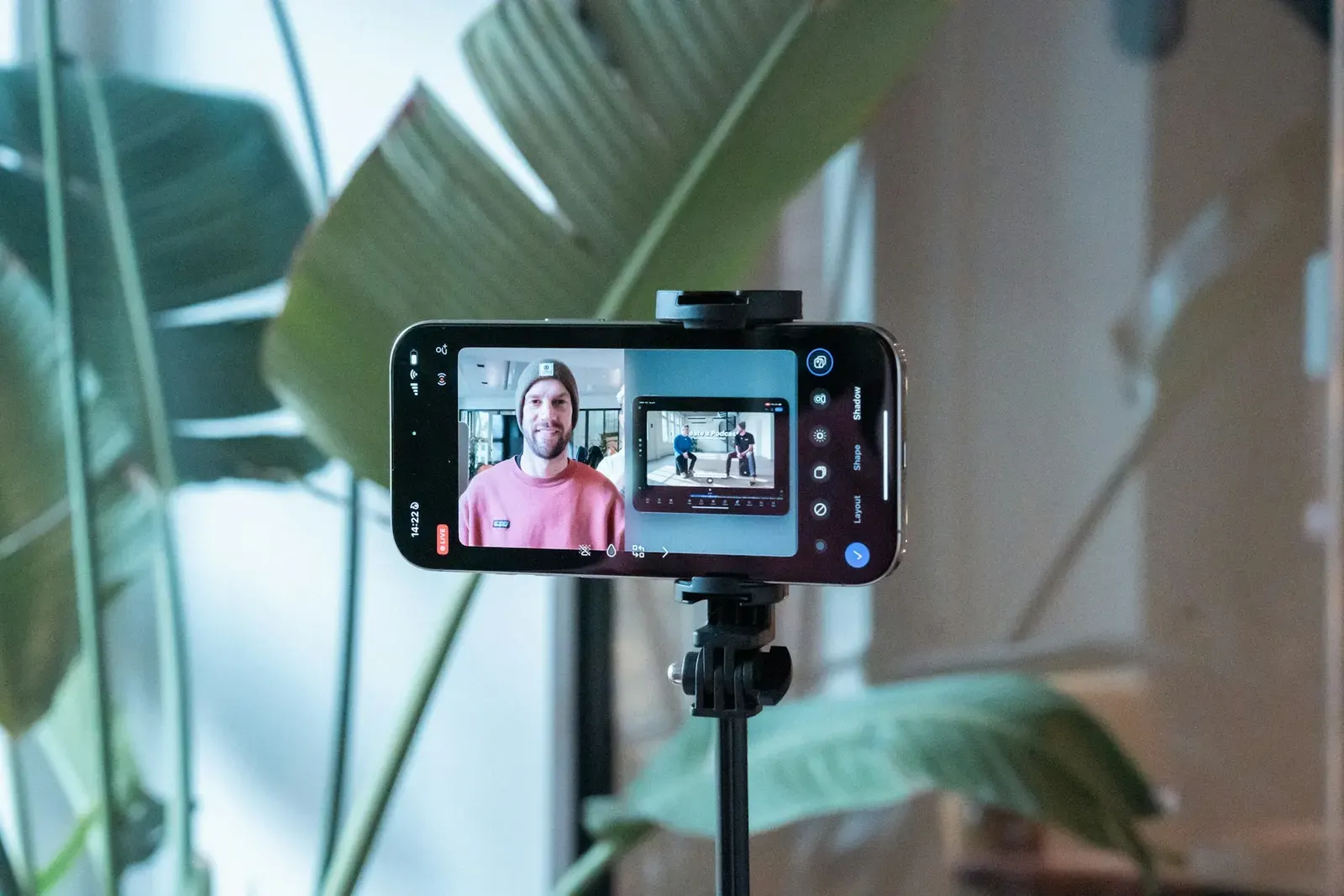
A UGC ad is defined by its source footage: someone outside the brand filmed it, in their own voice, on their own phone. The look follows from that: a face to camera, handheld framing, a kitchen or a car.
Three routes produce it. A customer posts about the product and the brand asks to reuse the post. A creator is paid to film content made for the brand, which the brand then runs as its own ad. Or the creator’s post runs from the creator’s handle with the brand’s budget behind it, which the trade calls whitelisting.
“UGC style” describes the look alone. An ad a brand films in-house with an employee holding a phone is UGC style; nothing about it needs a creator’s licence.
Where brands get UGC footage
Customers are the cheapest source and the least predictable: the brand gets what was posted, in the length and quality it was posted.
Paid creators are the usual source for ads. Brands brief them through creator marketplaces or direct, and pay per video, per bundle or by retainer; UGC creator rates sets out what they charge.
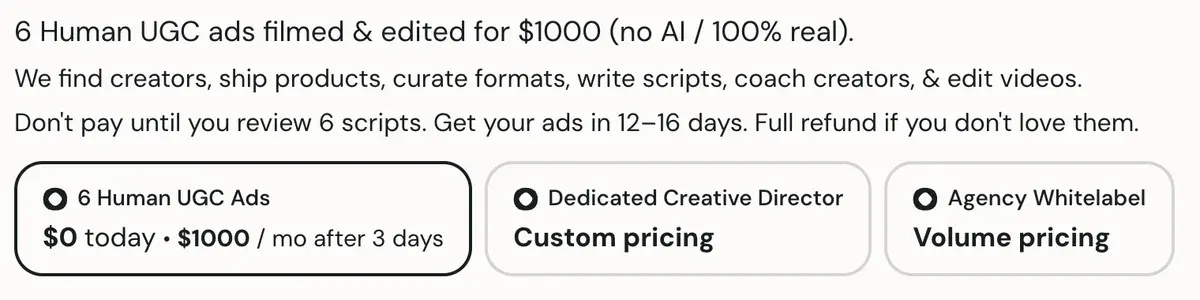
Human UGC services sit between the two. Icon is one, with a published price. Its plan lists 6 human-filmed ads for $1,000 a month: $166.67 per video if every ad in the bundle is used (pricing page, read ). The same page lists creator whitelisting and Ad Manager uploading.
Running a creator’s post as an ad on Meta
Meta’s partnership ads put a creator’s post into the brand’s campaign, and the brand pays for the reach. Meta’s developer documentation (read 2 October 2026) puts it plainly: “Partnership ads allow you to run Facebook and Instagram ads from a creator or other partner’s handle to expand your collaborations.”
The creator grants that permission in one of two ways, which Meta names post-level and account-level permissioning. Meta’s page names the two levels without defining them; read by their names, post-level covers one post and account-level covers the creator’s account. Agree in writing which level the creator grants before any money moves.
Running a creator’s post as an ad on TikTok
TikTok’s Spark Ads run an organic post as an ad. TikTok’s About Spark Ads page (last updated June 2026) calls it “a native ad format that allows you to leverage organic TikTok posts and their features in your advertising.”
The creator authorises it from the post itself. In the app they turn on the “Ad authorization” toggle, generate a video code and “select the authorization duration (7, 30, 60, or 365 days)” (TikTok Business Help Center, last updated October 2025). The brand pastes the code into Ads Manager.
The duration is a term of the deal. A 30-day code on an ad that scales in week three sends the brand back to the creator mid-campaign. Agree the length in the contract and ask for the matching code.
The usage rights to agree before you pay a creator
A creator’s fee buys the filming. The right to run the footage as a paid ad is a separate grant, and a contract that names only “content” leaves it open.
| Term | What to settle |
|---|---|
| Length of the licence | Months the brand may run the footage, and from which date |
| Channels | Which platforms, and whether organic posts, paid ads or both |
| Paid use | Whether the footage may carry ad spend at all, and on whose account |
| Edits and cut-downs | Whether the brand may cut the footage into shorter versions, re-caption it or dub it |
| Whitelisting access | Partnership-ad permission level on Meta, Spark code duration on TikTok |
| Exclusivity | Whether the creator may film for competing brands, and for how long |
| After the term | Whether live ads stop on the end date or may run on, and at what fee |
Scroll sideways for all 2 columns
Two rows cost money when left out. A licence silent on edits stops the brand cutting a 60-second video into three hooks. One silent on the end date leaves live ads in breach the day it passes.
Disclosure: when a UGC ad needs a paid-partnership label
This section reads the rules’ text; it is not legal advice. In the US, a paid creator’s ad needs a disclosure when viewers would not expect the payment.
The FTC’s Endorsement Guides (255.5(a), revised 26 July 2023) say that a connection to the seller “that might materially affect the weight or credibility of the endorsement”, where the audience would not reasonably expect it, “must be disclosed clearly and conspicuously”.
Such connections “can include monetary payment or the provision of free or discounted products”.
A free product counts, so the creator who was sent the item, with no fee, still has a connection to disclose.
The FTC’s rule on fake testimonials goes further. Section 465.2(a) makes it a violation “for a business to write, create, or sell” a testimonial that “materially misrepresents, expressly or by implication” whether the speaker used the product. The rule’s text covers a creator who never used the product reading “I’ve used this for a month”.
Platform labels for AI-made ads are a separate layer: Meta’s AI disclosure rules and TikTok’s AI-generated content label for ads cover them.
UGC ad examples
Four formats cover most UGC ads, one for each route above.
- A creator’s post run as a partnership ad: the creator films and posts, and the brand runs the post “from a creator or other partner’s handle” on Facebook and Instagram, with the brand’s budget behind it (Meta for Developers).
- A Spark Ad on TikTok: the creator’s organic post runs as the ad, for the 7, 30, 60 or 365 days the creator’s code allows (TikTok Business Help Center).
- A creator video the brand uploads as its own ad: footage made for the brand under a usage licence, such as Icon’s bundles of six human-filmed ads, run from the brand’s account.
- A customer’s clip reused with the poster’s permission: an unprompted review or unboxing, cut down and run from the brand’s account.
To find live examples, search the Meta Ad Library, Meta’s public search of ads running on its apps, for a brand name or a category word such as skincare. TikTok’s Creative Center Top Ads lists top ads, filterable by region and industry; filter by your industry and open the creator-filmed ones.
Read examples for structure: the hook in the first seconds, the product on screen, the line that names the offer. Neither library shows the rights behind an ad.
UGC ads made with AI
An AI UGC ad replaces the filmed creator with an AI presenter, and AI UGC meaning explains the formats. AI UGC against human UGC weighs the two by cost and rights.
The AI UGC tools hub compares the tools by price and ad rights. How to make AI UGC ads sets out the steps from brief to labelled ad.
Sources
- Meta for Developers: Partnership ads (Marketing API documentation), undated; what partnership ads are; post-level and account-level permissioning. Checked
- TikTok Business Help Center: About Spark Ads, last updated June 2026; Spark Ads as a native format built on organic posts; post authorisation with a chosen code duration. Checked
- TikTok Business Help Center: How to create Spark Ads for Smart+ Campaigns in TikTok Ads Manager, last updated October 2025; the creator turns on Ad authorization, generates a video code and picks 7, 30, 60 or 365 days. Checked
- eCFR, US Government Publishing Office: 16 CFR Part 255, Guides Concerning the Use of Endorsements and Testimonials in Advertising, 255.5(a) on material connections; revised by 88 FR 48102, 26 July 2023. Checked
- eCFR, US Government Publishing Office: 16 CFR 465.2, Fake or false consumer reviews, consumer testimonials, or celebrity testimonials, paragraph (a), a testimonial that materially misrepresents the testimonialist or their experience. Checked
- Icon: Icon pricing page, 6 human-filmed ads a month, creator whitelisting and Ad Manager uploading listed. Checked
- Meta: Meta Ad Library, public search of ads running on Meta’s apps. Checked
- TikTok: TikTok Creative Center, Top Ads, TikTok’s gallery of top-performing ads by region and industry. Checked
What changed on this page
- Page written.

Alexandre S.
Alexandre S. is a creative strategist and copywriter with ten years in content and SEO. He writes and edits short-form ads, works in English and French, and reads the pricing and terms pages behind every tool on this site before anything is written about it.
Related pages
-
 Guide AI UGC price per ad, tool by tool
At list price, with plan credits used in full, a 30-second AI UGC video costs $0.10 (HeyGen Avatar III) to $4.00 across seven tools. Checked 24 September 2026.
- Guide AI disclosure in advertising, platform by platform
Where a platform or a law asks you to disclose AI in an ad, each rule quoted with its date. Meta, TikTok, YouTube, New York, California and the EU.
- Profile Arcads for UGC ads
Arcads shows no price list; its help centre lists 800 credits per actor minute, “always rounded up”. What it makes and its ad terms, checked 24 September 2026.
- Data AI commercial use, tool by tool and plan by plan
Can a tool’s output run in your paid ads? Terms quoted with clause and date for each plan: allowed, conditional, barred or unclear. Checked 26 September 2026.

