AI influencer marketing
AI influencer marketing is a brand paying for, or building, a made-up creator who posts and appears in ads. The creator is a character made with AI image and video tools, run by a team. The phrase also covers AI software that helps brands find human influencers; this page is about the made-up kind.
Brands do it two ways. They rent a character an agency already runs, with its audience, or they build their own on a tool like Higgsfield, from $19 a month.
| Question | Rent an agency’s character | Build a brand-owned one |
|---|---|---|
| What you pay | A fee per post or campaign | Tool plans plus your team’s time |
| Audience | The character’s followers | Starts at zero |
| Who owns the face | The agency | Your brand, under the tool’s terms |
| Best for | A launch that needs reach now | Always-on posts and ads for years |
| Example | Aitana, from The Clueless agency | Lu, Magazine Luiza’s virtual (3D) character since 2003 |
Scroll sideways for all 3 columns

Should you rent an AI influencer or build your own?
Rent when you need reach this quarter; build when you want a face your brand keeps.
Renting works like booking a human creator. In March 2024 Euronews’ profile of Aitana, made by the Barcelona agency The Clueless, put her at just over 1,000 euros per advert. She was the face of the sports supplement brand Big. No photo shoots happen: her images come from a team of AI and design specialists.

Building is the long game.
Lu, a virtual 3D character older than today’s AI image tools, shows how long a brand-owned face can last.
Brazil’s retailer Magazine Luiza created her in 2003 as the voice of its online shop. With Ogilvy São Paulo she became an influencer, on live TV and in music videos, and she is still “the face of the brand”, per Ogilvy’s case page.
There is a third route between the two: a digital twin of a real person. H&M announced replicas of 30 real models with the AI firm Uncut in March 2025, each with the model’s consent (FashionUnited).
The first images ran on 2 July 2025. H&M says the models keep ownership of their likeness and share in the revenue, and that the digital models are tagged (FashionUnited).
How an AI influencer compares with a human one on cost per post: AI influencer vs real influencer.
What does a brand-owned AI influencer cost each month?
A brand-owned character starts at $19 a month a month on Higgsfield’s Starter plan. A second plan adds a talking presenter if you need one.
| Tool | Job in the campaign | Entry plan |
|---|---|---|
| Higgsfield | Builds the character, keeps the face, makes images and video | Starter, $19 a month |
| HeyGen | A talking presenter from a script, in many languages | Creator, $29 a month |
| MakeUGC | UGC-style ads read by stock AI actors | Starter, $59 a month |
Scroll sideways for all 3 columns
Higgsfield’s AI Influencer Studio is the building step.
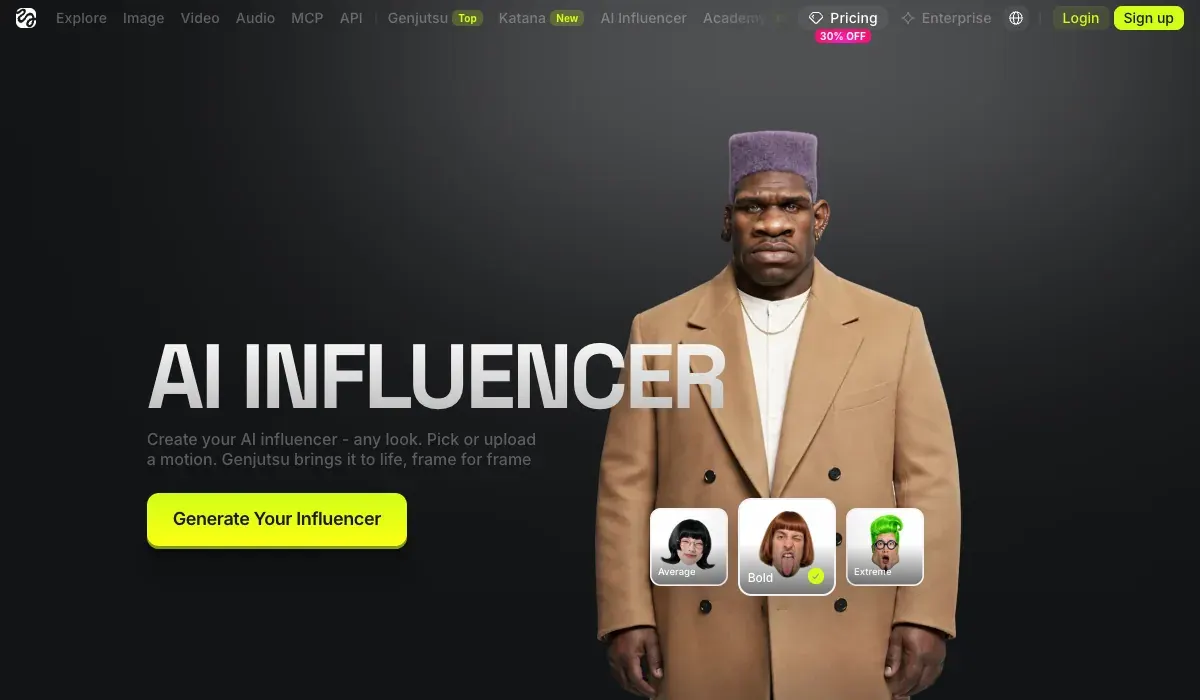
You pick the face from menus, at 1.12 credits a character.
One generation costs 1.12 credits, about $0.06, and returns a close-up portrait and a full-body shot.
Video happens in the same studio: the Motion tab runs Genjutsu Motion transfer and Objects swap at 480p, 720p or 1080p.
Then you animate it with a trending motion or your own clip.
How do I generate a character?
1. Open higgsfield.ai/ai-influencer-studio and select Create new.
2. Set the base identity in the Builder panel: character type, gender, origin, skin color, eye color, skin conditions, and age.
3. Fine-tune in Advanced settings: the Face, Body, and Style tabs.
4. Generate. The credit cost is shown before you confirm.
5. Refine the result if needed: use the buttons under the preview to regenerate or save, or type a change into the Type to customize character field and select Edit: text edits cost credits, and the exact cost is shown on the Edit button.
How do I animate the character? You can turn the character into video directly from AI Influencer with the video button under the preview. For motion driven by a real performance, record a video of yourself performing the movement and use Motion Control with your character’s image and your recording as the motion reference: the character follows your movements while keeping its own look.
Its Soul ID trains the face on “at least 20 photos of the same person”, in about 3 to 5 minutes (Soul ID post).
What is Soul ID?
Train once and reuse the identity.
A trained Soul ID works across the Soul family.
Every step, in order: Higgsfield AI Influencer walkthrough.

In public reviews, five of 52 sources say characters and products stay consistent through Soul ID, Elements and reference sheets (YouTube, YouTube). Nine of 52 report refunds refused once any credit is used, under terms section 9.3 (Trustpilot).
HeyGen fits a spokesperson who speaks.
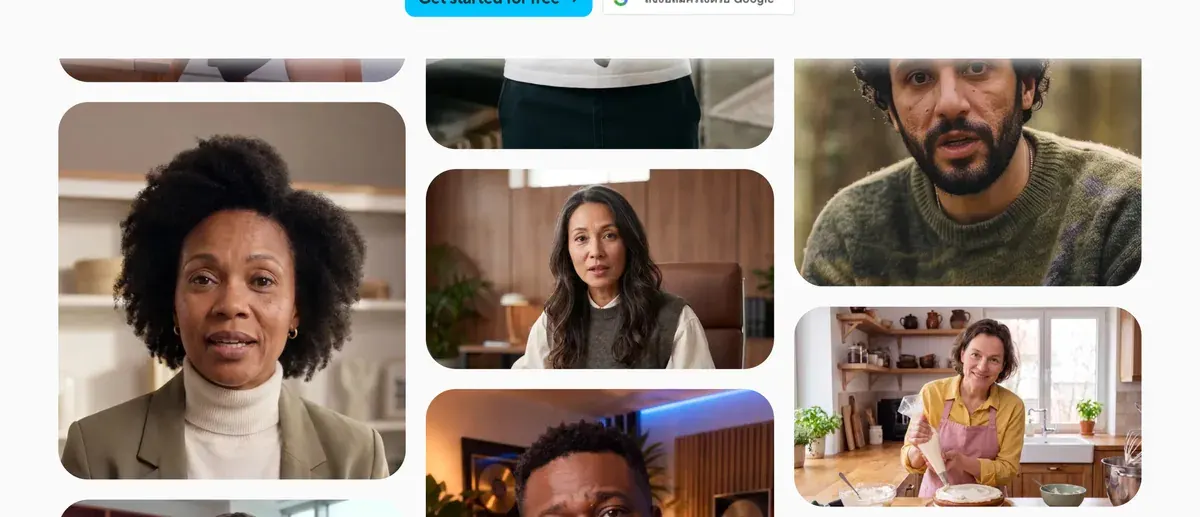
Its Creator plan includes one custom digital twin, per its pricing page. A 30-second avatar video costs $0.10 per video on Creator, if every credit is used.
Eight of 39 HeyGen sources say the avatars look real and the lip sync lands (G2, Product Hunt). Eight of 39 say every fix or retake costs credits, including fixes for the tool’s own errors (App Store, Trustpilot).
Which campaign formats work with an AI influencer?
Four formats recur in the tools’ own use cases, and the always-on account has a long-running brand example.
The first is the product try-on. The character wears or holds your product in scene after scene. Higgsfield’s Soul ID post pitches fashion brands “virtual lookbooks, seasonal campaigns, and product showcases”. Its object swap changes one element, the outfit or the product, and leaves the rest of the clip alone (AI Influencer page).
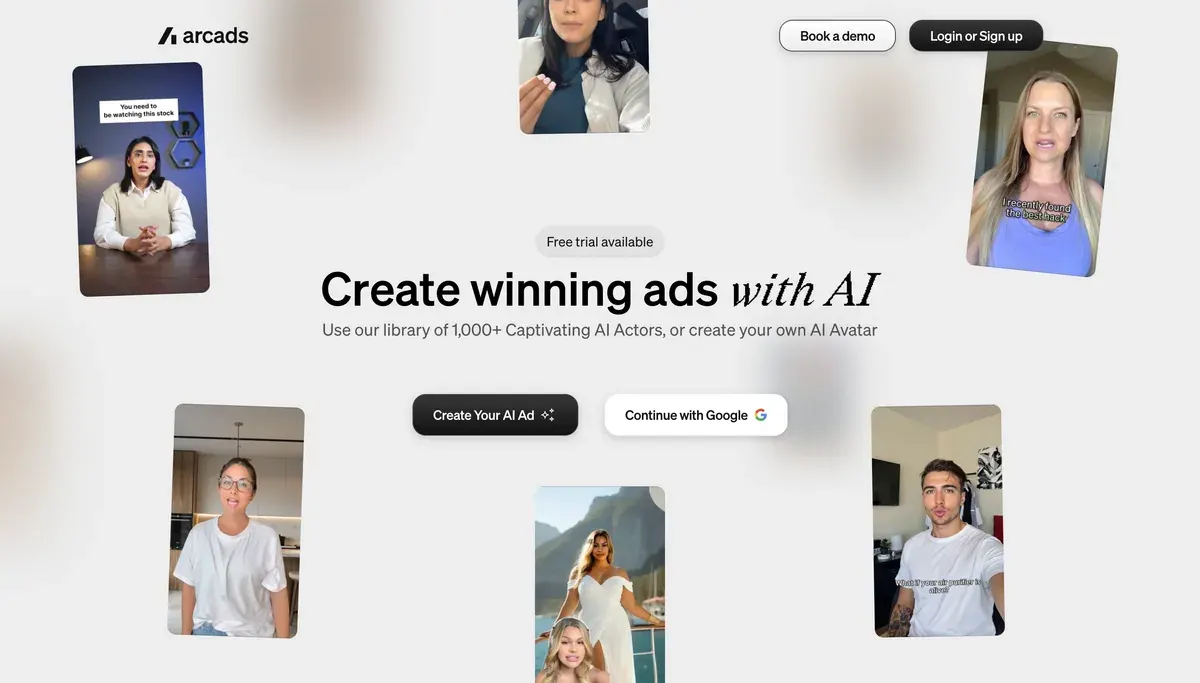
The second is the UGC-style ad, a phone-shot clip of someone talking about a product. A paid ad needs no character with followers at all. A stock AI actor reads your script. Arcads states a library of over 1,000 actors.
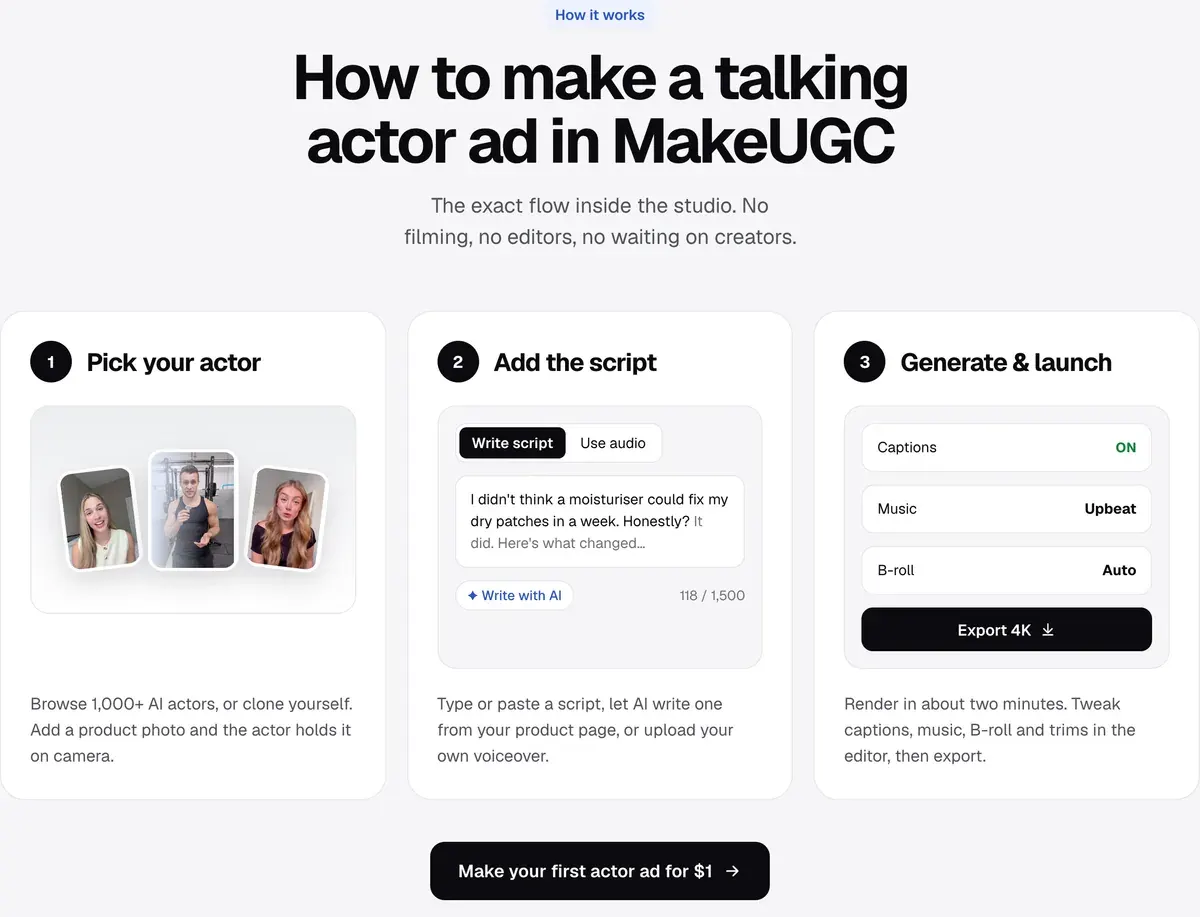
MakeUGC works in three steps: pick an actor, add a script, then generate and export.
AI actors for ads sets the tools side by side.
The third is the always-on account: a character that keeps posting for years, the way Lu does for Magazine Luiza.
The fourth is the spokesperson, one face that explains offers and answers questions in video. Higgsfield’s blog lists “a spokesperson character” for marketers as a use case.
One format carries more risk. Guess ran two AI models from the London agency Seraphinne Vallora in the August 2025 American Vogue. ABC7 reported readers criticising the magazine for showing “fake women”. In premium print, where readers expect real models, one campaign was enough to draw that criticism.
How do you brief an AI influencer campaign?
Brief the character before the campaign. A human creator brings a personality; an AI one only has what you write down.
- Write a character sheet: name, age, look, voice, the topics they post about and the ones they never touch.
- Fix the face. Train one identity, such as a Higgsfield Soul ID, and make every image from it.
- Clear the rights. Section 5.3 of Higgsfield’s terms makes you warrant “all consents, releases, and permissions required under applicable law” for any real face or voice.
- Check who can reuse your files. Under 4.4 of Higgsfield’s terms, it may train on your inputs and outputs unless you hold an Enterprise Agreement.
- Plan the labels before the first post: an ad disclosure on paid posts and an AI label where the platform asks.
- Set an approval step. Someone checks every clip for hands, lip sync and product accuracy before it posts.
Users report why: five of 29 MakeUGC sources say lip sync drifts and hands move oddly, so clips need a human check (YouTube, YouTube).
How do you measure an AI influencer campaign?
Measure it like any creator campaign, then add one check a human creator rarely needs: reading the comments about the character itself.
Engagement rate is the usual first number: all interactions on a post divided by the number of followers. The 2026 IAE Bretagne Sud paper uses that formula. It finds no significant gap between a virtual and a human account over 24 months.
Read the comments too. In the same paper, comments on the virtual account mostly talk about her digital identity, and the human’s about appearance and fashion. If your comments are about the AI instead of the product, the character is the story.
For paid ads, judge on cost per result. Run the AI character against a human creative with the same hook and offer, as our creative testing framework sets out. What public tests find: AI UGC vs human UGC.
Watch the wider mood as well. In Gartner’s survey of 1,006 US consumers, 65% say brands use too much AI-generated content in marketing.
What are the disclosure and platform rules?
An AI influencer’s paid post needs the same ad disclosure as a human’s. Meta and TikTok add an AI label in the cases each platform sets. New York requires a disclosure for a synthetic performer in an ad.
The ad disclosure follows the US Federal Trade Commission’s plain rule: a paid post discloses the brand relationship.
When to disclose
Relationship. Disclose when you have any financial, employment, personal, or family relationship with a brand.
Value. Disclose the relationship if you got anything of value to mention a product.
Placement. The disclosure should be placed with the endorsement message itself. Use simple and clear language.
Meta labels some AI-made content itself and, in some cases, requires creators to label it (Meta AI disclosure).
How to identify AI content on Meta products
Content with signals that we can identify indicating that it was created with AI will be labelled AI info.
People using Meta products may also be able, and in some cases required, to label their content.
When is a label required? Meta may require an AI label when content has photorealistic video or realistic-sounding audio. This requirement does not apply to images. There may be penalties for content shared without a label when it is required.
On Instagram, a creator can switch on an AI Creator label in the profile settings.

TikTok asks for its AI label on AI-generated content (TikTok AI label), and lists AI-generated media among its mandatory ad disclaimers.
Mandatory disclaimers: AI-generated, synthetic, or manipulated media. This includes images, video, or audio that are completely AI-generated or real source material that has been significantly modified by AI.
The toggle sits in the post settings, before you publish.

New York’s law on synthetic performers in ads has applied since 9 June 2026 (AI actor disclosure).
The full set of rules, with the US endorsement guides: is an AI influencer legal?
What does an AI influencer agency do?
An AI influencer agency designs a character, makes its posts and sells its brand deals. Some also build characters for a brand to keep.
The Clueless runs Aitana and sells her advert slots. Seraphinne Vallora made the Guess models for one campaign.
Before you sign, ask four questions:
- Who owns the character and its face once the contract ends?
- Which tools make it, and do their terms allow your use in paid ads?
- Does any real person’s likeness sit inside the character, and do you hold their consent in writing?
- Who adds the AI label and the ad disclosure on each post?
If you would rather keep the character in-house, every route and tool is on how to create an AI influencer. Ways a character earns once it has followers: make money with an AI influencer.
Questions brands ask about AI influencers
Do AI influencers work for marketing?
On engagement, yes: one 24-month study finds a virtual account matching a human one. Brand-owned virtual characters such as Magazine Luiza’s Lu have fronted a brand since 2003.
How much does an AI influencer cost a brand?
Building one starts at a tool plan from $19 a month on Higgsfield. Renting Aitana cost just over 1,000 euros per advert in March 2024.
Do I need an agency to run an AI influencer?
No. The tools are sold direct. An agency adds a character with an existing audience, or takes the daily making and posting off your team.
Next on Higgsfield: the AI brand video generator
Sources
- Ogilvy: Lu do Magalu, Lu began in 2003 as the voice of Magazine Luiza’s online shop; Magalu and Ogilvy Sao Paulo turned her into an influencer on live TV and in music videos while she stays the face of the brand; Cannes Lions Gold. Checked
- FashionUnited: H&M to create twins of models with AI (28 March 2025), Digital replicas of 30 real models with the AI firm Uncut, for social posts and marketing campaigns, with each model’s consent. Checked
- FashionUnited: H&M turns to AI digital twins in new campaign (4 July 2025), First images on 2 July 2025; the models keep ownership of their likeness and share in revenue; digital models are tagged. Checked
- Euronews: Meet the first Spanish AI model earning up to 10,000 euros per month (22 March 2024), Aitana, made by The Clueless agency in Barcelona: just over 1,000 euros per advert; the face of the sports supplement brand Big; images made by AI and design specialists with no photo shoots. Checked
- ABC7 News: Controversy stirs over AI generated models in new Guess ads appearing in Vogue (1 August 2025), Two AI models made by the London agency Seraphinne Vallora in a Guess advert in the August 2025 American Vogue; reader criticism. Checked
- Gartner: Gartner Marketing Survey Finds 35% of Consumers Rely on Influencers Less Due to AI (22 September 2026), 1,006 US consumers, May to June 2026; 65% say brands use too much AI-generated content in marketing; 57% trust brand messages less as a result. Checked
- Marketing Trends Congress 2026, IAE Bretagne Sud: Exploration of Engagement and Interaction Patterns with Virtual vs Human Influencers, Engagement rate as total interactions over audience size; no significant difference between a virtual and a human account over 24 months; comments on the virtual account mostly about her digital identity. Checked
- Higgsfield: Introducing the New AI Influencer (3 October 2026), Seven steps from the builder to video; 1.12 credits a character; use cases include a spokesperson character for marketers and product placement through object swap. Checked
- Higgsfield: AI Influencer, Object swap changes one element such as the outfit or product; 3 to 30 second reference clips; up to 40 images a video; 1080p. Checked
- Higgsfield: Soul ID, AI character consistency (15 June 2026), At least 20 photos, about 3 to 5 minutes of training; virtual lookbooks, seasonal campaigns and product showcases for fashion brands. Checked
- Higgsfield: Higgsfield Terms of Use (last updated 23 October 2026), 4.4 lets Higgsfield train on inputs and outputs unless you hold an Enterprise Agreement; 5.3 makes you warrant all consents, releases and permissions required under applicable law for any real face or voice; 9.3 on refunds. Checked
- US Federal Trade Commission: Disclosures 101 for Social Media Influencers, Disclose any financial, employment, personal or family relationship with a brand, and anything of value received to mention a product. Checked
- HeyGen: HeyGen pricing, Plans and what each includes, custom digital twin on Creator. Checked
- Trustpilot, G2, Reddit and YouTube: Higgsfield, HeyGen, MakeUGC and Arcads user reports, 52 Higgsfield, 39 HeyGen, 29 MakeUGC and 64 Arcads public sources synthesised. Checked

Alexandre S.
Alexandre S. is a creative ad strategist and copywriter with ten years' experience in digital marketing across multiple channels.
Related pages
-
 Guide What is an AI influencer?
An AI influencer is a made-up creator whose face and videos come from AI tools, run by an agency, a brand or one person. How they work and get labelled.
-
 Guide How to make money with an AI influencer
AI influencers earn from brand deals, affiliate links, content sales, creator programmes and products. What each needs and costs. Checked 24 Oct 2026.
-
 Guide Famous AI influencers
13 famous AI and virtual influencers, who runs each one and their follower counts, each figure with its source and date. The biggest: a mascot and a sausage.
-
 Guide A creative testing framework for Meta ads
AI makes ad variants cheap, but each still needs spend before its result means anything. A Meta creative testing framework with the budget maths shown.


