AI influencer vs real influencer
An AI influencer is a made-up person, built with AI image and video tools, who posts on social media and appears in ads. A real influencer is a person with an audience they grew themselves.
The two price different things. A human’s fee buys their followers’ attention; an AI character costs cents to make and starts with no followers at all.
Influencer Marketing Hub’s rate guide puts an Instagram micro creator, with 10,000 to 100,000 followers, at $150 to $500 a standard feed post. On Higgsfield, one AI character costs 1.12 credits, a few cents of a monthly plan’s allowance.
| Question | AI influencer | Real influencer |
|---|---|---|
| What you pay for | Tool credits and someone’s time to run the account | Access to an audience, plus the content |
| Audience on day one | None, unless you rent an agency’s character | The creator’s existing followers |
| Control | Total, down to every caption | Shared: the creator has a voice of their own |
| Speed | No shoot to book | Booked around the creator’s schedule |
| Trust | Backlash risk; one 24-month study finds equal engagement | The reason brands pay; 35% of US shoppers rely on influencers less because of AI |
| Labels | An ad disclosure, plus an AI label where the platform or the law asks | An ad disclosure |
Scroll sideways for all 3 columns

How much does an AI influencer cost compared with a real one?
An AI influencer you build yourself costs a tool subscription, and almost nothing per image. The real cost is the audience it does not have yet.
Start with the human side. Influencer Marketing Hub’s guide puts a TikTok micro creator at about $200 to $800 a video. The guide states no method.
A creator who films an ad for your own accounts, with no posting to their followers, charges less. That job is UGC, and our UGC creator rates page reads every published rate card.
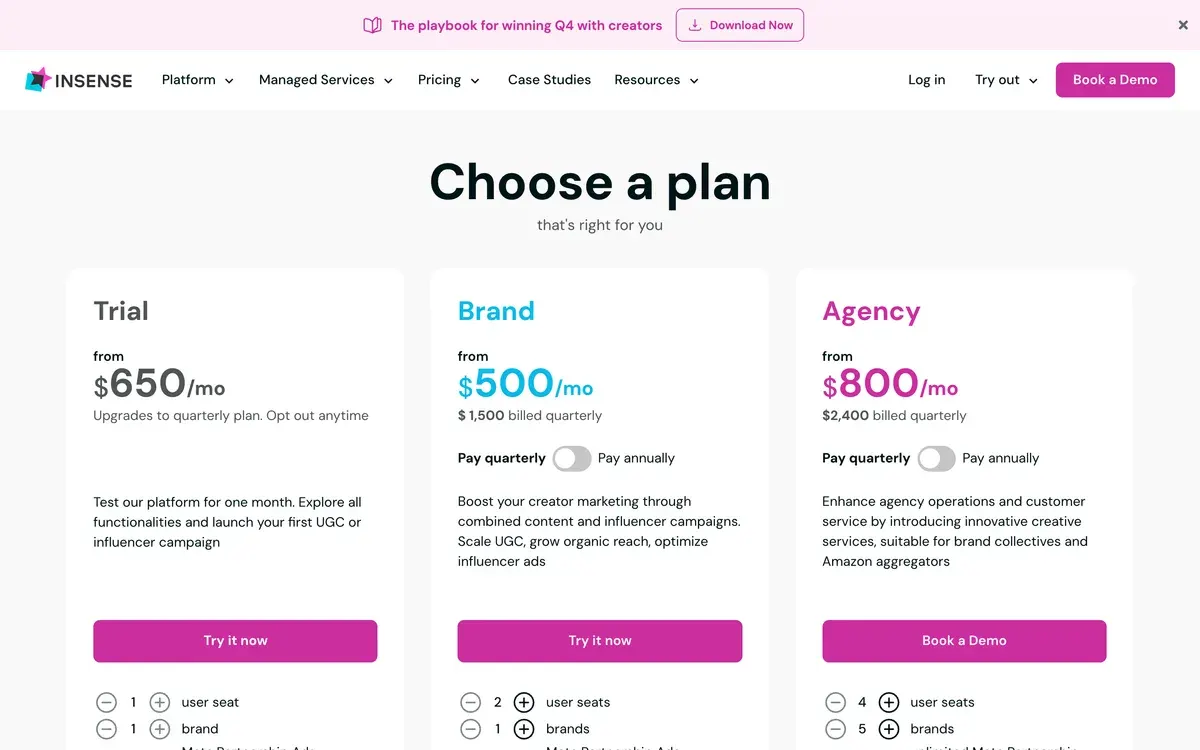
A creator marketplace charges its own fee before any creator is paid. Insense’s Brand plan starts at $500 a month, billed quarterly at $1,500.
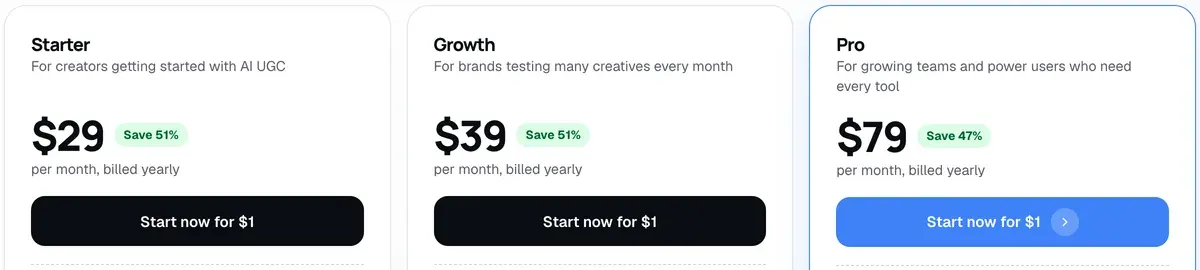
Now the AI side. Higgsfield’s AI Influencer post puts one character at 1.12 credits, about $0.06 at its rate of 20 credits a dollar. On the Starter plan, from $19 a month, the same character is about $0.08 if every credit is used. Each video shows its own credit cost before it runs.
A talking ad is priced per clip. One talking-actor video on MakeUGC works out at $11.80 per video on Starter, if every credit is used.
| Who makes it | Cost | What the price includes |
|---|---|---|
| Instagram micro influencer | $150 to $500 a post | The post and its reach to 10,000 to 100,000 followers |
| Rented AI influencer (Aitana) | Just over 1,000 euros an advert (March 2024) | The post and the agency’s audience |
| Higgsfield AI character | $0.06 a character at the blog’s rate, about $0.08 on Starter; video priced per run | The images; no audience |
| MakeUGC AI actor | $11.80 per video | One talking-actor video; no audience |
Scroll sideways for all 3 columns
The rented line comes from Euronews’ profile of Aitana, a character run by the Barcelona agency The Clueless. In March 2024 her creators put her at just over 1,000 euros per advert (Euronews). That is more than twice a micro creator’s top rate, because a rented AI influencer sells the same thing a human does: followers.
So the cheap line only holds if you never need reach. A brand-built character has to earn its audience post by post, or you buy that reach as ad spend.
Do people trust AI influencers?
In Gartner’s 2026 survey, 35% of US consumers say AI makes them rely on influencers less. A 24-month study of an AI character finds the same engagement as a human, and a higher share of negative comments.
Gartner surveyed 1,006 US consumers in May and June 2026. In its release, 35% say they now rely on influencers less because of AI. Retail-News’ report of the same survey adds that 43% turn to real people more often for buying advice.
That is the case for the human creator. People are looking harder for someone real.
Engagement tells a different story. A 2026 paper from IAE Bretagne Sud compared one virtual and one human influencer from the same French region over 24 months. Both had about 11,000 to 14,000 followers, across more than 400 posts. The paper finds no statistically significant difference between the two in likes, comments or engagement rate.
The same paper finds a higher share of negative comments on the virtual account. Negative comments were few on both accounts, the authors note.
The study covers two accounts, and its authors call it the first comparison of its kind in France.
Backlash is the risk that sticks. Guess ran AI-generated models from the agency Seraphinne Vallora in the August 2025 American Vogue. ABC7 reported a wave of criticism, including a commenter who said the ad made her less likely to buy.
One finding helps if you build a character anyway. A study by Cascio Rizzo, Berger and Villarroel on arXiv finds virtual influencer posts do better when another person appears in the shot. The companion makes the character seem more human, and so more trustworthy.
Which gives you more control and speed?
An AI influencer gives you full control and same-day posts. You also take on every job a creator used to do.
The Clueless built Aitana after campaigns stalled on human models. Its founder, Rubén Cruz, told Euronews: “Often it was the fault of the influencer or model and not due to design issues.” An AI character never cancels a shoot. It never posts something you did not approve, either.
Keeping the face the same is the hard part. Higgsfield’s Soul ID trains a face on “at least 20 photos of the same person” in about 3 to 5 minutes (Soul ID post, 15 June 2026). Five of 52 user sources say characters and products stay consistent across shots through Soul ID, Elements and reference sheets (YouTube, YouTube).
The tool can also stop you mid-campaign. Three of 52 Higgsfield user sources report it blocking prompts, and even characters it generated itself (Reddit, Reddit). A human creator brings their own ideas and a reason to follow them. A character has none of that until you write it.
If you go the AI route, the building step is where Higgsfield fits. Its AI Influencer Studio builds a character from menus, then animates it from a trending motion or a 3 to 30 second clip you upload.
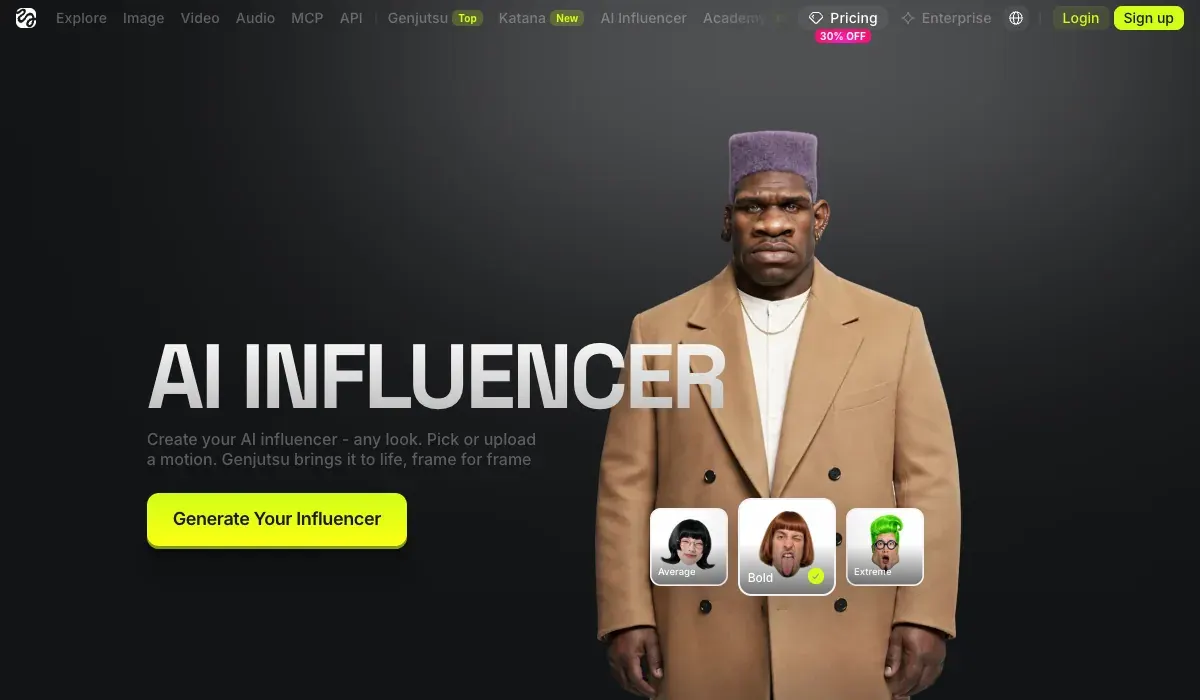
Our Higgsfield AI Influencer walkthrough goes step by step.

What do you have to disclose with each?
Both need an ad disclosure when a brand pays. The AI character adds one more duty: telling people it is AI.
The US Federal Trade Commission’s endorsement rules cover a made-up creator too. Section 255.0(b) says the endorser “could be or appear to be an individual, group, or institution” (16 CFR 255.0). A virtual influencer looks like an individual to its followers, so a paid post needs the same “ad” or “paid partnership” label a human uses.
The AI label sits on top. Meta labels some AI-made content itself and, in some cases, requires creators to label it (Meta AI disclosure).
How to identify AI content on Meta products
Content with signals that we can identify indicating that it was created with AI will be labelled AI info.
People using Meta products may also be able, and in some cases required, to label their content.
When is a label required? Meta may require an AI label when content has photorealistic video or realistic-sounding audio. This requirement does not apply to images. There may be penalties for content shared without a label when it is required.
TikTok asks for its own label on AI-generated content (TikTok AI label). Every ad label, platform by platform: AI ad disclosure rules. New York has required a conspicuous disclosure of a synthetic performer in ads since 9 June 2026 (AI actor disclosure rules).
Your tool’s terms can go further. Section 5.2(xi) of Higgsfield’s terms bars representing “that any Output is human-generated when it is not”. So a character passed off as a real person breaks Higgsfield’s terms, whatever the platform allows. Every rule, platform by platform: is an AI influencer legal?
When does each one win?
Pick by what you are short of.
A real influencer wins when:
- you need reach next week, and the creator’s followers are the people you sell to;
- the product needs proof in use, such as skincare results or a food tasting;
- you sell something people want a real person to vouch for, such as a financial product;
- nobody on your team has time to run an account every day.
An AI influencer wins when:
- you post every day and need the same face in every post;
- the brand owns the character for years, the way a mascot works;
- you sell clothes or products a character can wear or hold in many settings;
- you want many versions of one video, each with a different product swapped in.
You can run both: rent human reach for a launch and keep an AI character for the posts in between.

How brands plan that, with named campaigns: AI influencer marketing. Every tool and route to build one: how to create an AI influencer.
What if you only need an ad?
If you only need a face to read your script in a paid ad, you do not need an influencer at all. An AI actor does it: a stock presenter from a library, with no account or followers.
Arcads and MakeUGC both sell this. In public reviews, 16 of 64 Arcads sources say its stock actors look natural enough to pass as creator content (Reddit, Trustpilot). Nineteen of 64 call the price high for what a month buys (Trustpilot, Reddit).
On MakeUGC, three of 29 sources say its talking-actor clips look real enough to pass in a fast-scrolling feed (Trustpilot, YouTube). Seventeen of 29 report charges continuing after cancelling (Trustpilot, Trustpilot).
The side-by-side list is AI actors for ads, and the whole category sits on the AI UGC hub. Whether AI ads convert like filmed ones has its own evidence register: AI UGC vs human UGC.
Questions about AI and real influencers
Are AI influencers better than real influencers?
Neither wins on every count. AI characters cost less per post and give full control. Real influencers bring an audience and more trust.
Do AI influencers get more engagement than humans?
Not in the French study. Over 24 months and 400 posts, it finds no statistically significant difference between a virtual and a human account of similar size.
Do brands pay AI influencers?
Yes, when the character has an audience. In March 2024 Aitana’s agency quoted just over 1,000 euros per advert, above the $150 to $500 Instagram micro range.
Next on Higgsfield: Commercial Faces
Sources
- Influencer Marketing Hub: Micro Influencer Rates For 2026: A Complete Cost Guide for Brands (updated 7 July 2026), Instagram micro creators with 10,000 to 100,000 followers at 150 to 500 dollars a standard feed post; TikTok micro creators at about 200 to 800 dollars a video; no method stated. Checked
- Gartner: Gartner Marketing Survey Finds 35% of Consumers Rely on Influencers Less Due to AI (22 September 2026), Survey of 1,006 US consumers, May to June 2026; 35% rely on influencers less because of AI, 43% turn to real people more often, 57% trust brand messages less. Checked
- Retail-News: Gartner: KI-Content schwächt Vertrauen in Influencer (28 September 2026), Report of the same Gartner survey with the 43% and 57% figures. Checked
- Marketing Trends Congress 2026, IAE Bretagne Sud: Exploration of Engagement and Interaction Patterns with Virtual vs Human Influencers: A 24-Month Comparison of Two Breton Personalities, One virtual and one human influencer with about 11,000 to 14,000 followers each, more than 400 posts over 24 months; no statistically significant difference in likes, comments or engagement rate; a higher share of negative comments on the virtual account, from few negative comments. Checked
- arXiv, Cascio Rizzo, Berger and Villarroel: What Drives Virtual Influencer’s Impact? (24 January 2023), Posts where a virtual influencer appears with a companion have more impact, because the companion makes the character seem more human and so more trustworthy. Checked
- Euronews: Meet the first Spanish AI model earning up to 10,000 euros per month (22 March 2024), Aitana, made by The Clueless agency: just over 1,000 euros per advert, up to 10,000 a month, around 3,000 on average, by her creators’ figures. Checked
- ABC7 News: Controversy stirs over AI generated models in new Guess ads appearing in Vogue (1 August 2025), AI models from Seraphinne Vallora in a Guess advert in the August 2025 American Vogue; reader backlash. Checked
- US Federal Trade Commission, eCFR: 16 CFR 255.0, Endorsement Guides: purpose and definitions, 255.0(b) on who counts as an endorser, real or apparent individuals included. Checked
- Insense: Insense pricing, Brand plan from 500 dollars a month, billed quarterly at 1,500 dollars; the marketplace fee before any creator is paid. Checked
- Higgsfield: AI Influencer, 1.12 credits to create or edit a character; each video shows its cost before it runs; 3 to 30 second reference clips; 1080p. Checked
- Higgsfield: Introducing the New AI Influencer (3 October 2026), A character costs 1.12 credits, about 6 cents at 20 credits per dollar; use cases include a spokesperson character for marketers. Checked
- Higgsfield: Soul ID, AI character consistency (15 June 2026), At least 20 photos of one person; training takes about 3 to 5 minutes; the identity stays inside Higgsfield. Checked
- Higgsfield: Higgsfield Terms of Use (last updated 23 October 2026), 5.2(xi) bars presenting output as human-generated when it is not; 5.3 on consent for any real face or voice. Checked
- Trustpilot, Reddit and YouTube: Higgsfield, MakeUGC and Arcads user reports, 52 Higgsfield, 29 MakeUGC and 64 Arcads public sources synthesised. Checked

Alexandre S.
Alexandre S. is a creative ad strategist and copywriter with ten years' experience in digital marketing across multiple channels.
Related pages
-
 Guide What is an AI influencer?
An AI influencer is a made-up creator whose face and videos come from AI tools, run by an agency, a brand or one person. How they work and get labelled.
-
 Guide Famous AI influencers
13 famous AI and virtual influencers, who runs each one and their follower counts, each figure with its source and date. The biggest: a mascot and a sausage.
-
 Guide AI UGC vs human UGC: what the evidence says
Public comparisons of AI and human UGC ads, graded on how each was run and by whom. Most come from sellers or a single account. Checked 24 September 2026.
-
 Guide How much do UGC creators cost?
UGC creator rates as marketplaces publish them, the fees on top and the usage rights each includes, beside AI’s cost per ad. Checked 2 October 2026.


