Clipping for money
Clipping for money means getting paid to cut a long video, such as a podcast or a stream, into short vertical clips. Clippers post them on TikTok, Instagram, YouTube Shorts and X. Clippers get paid when a brand or creator funds a campaign and pays per 1,000 views on the clips it approves.
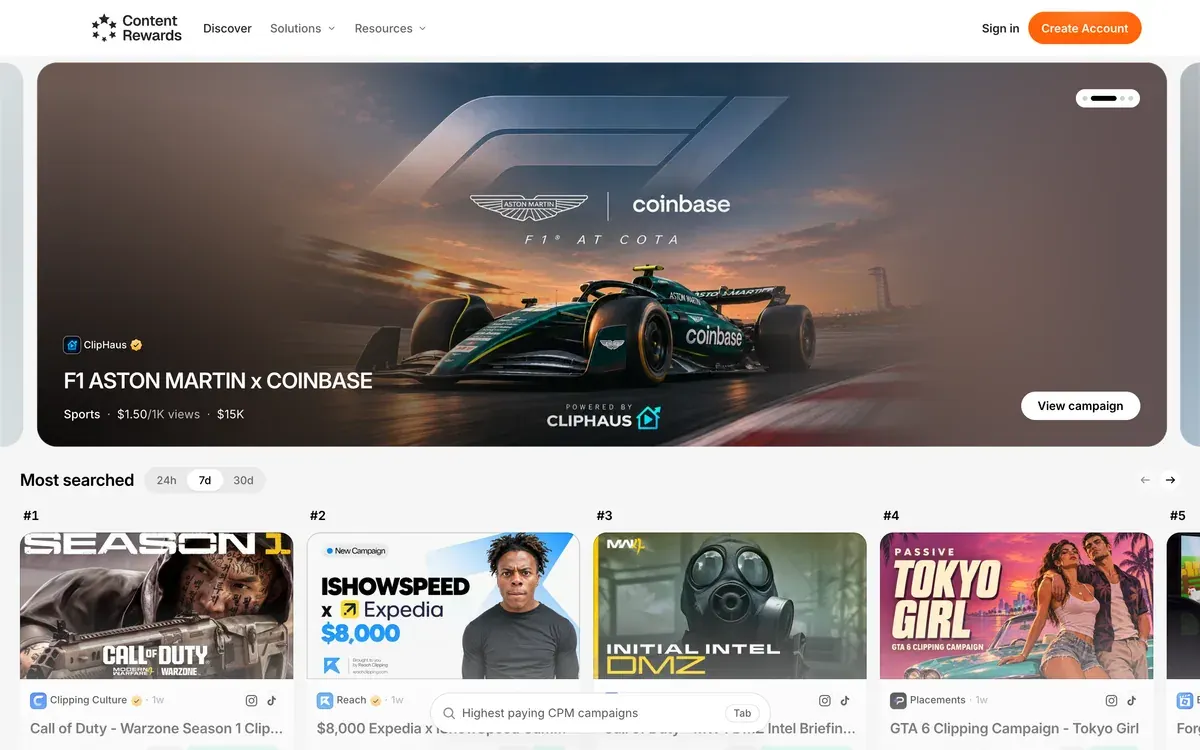
Much of that money runs through campaign marketplaces such as Content Rewards and Vyro (NPR). Content Rewards started on Whop and now has its own app at contentrewards.com.
Its own count of 707 campaigns put the median advertised rate at $1.09 per 1,000 views (payouts article). Campaigns that fill “mostly sit between” $0.80 and $2.00, and the platform keeps a flat 10% of what you earn. Per-post and retainer campaigns with a budget of $5,000 or more waive it.
| Rate per 1,000 views | Views a clip needs before it is reviewed | Earned at 100,000 views | Views that reach the cap |
|---|---|---|---|
| $0.50 | 4,000 at a $2 minimum | $50 | 400,000 at a $200 cap |
| $1.00 | 2,000 at a $2 minimum | $100 | 200,000 at a $200 cap |
| $3.00 | 2,000 at a $6 minimum | $200 (cap reached) | 66,667 at a $200 cap |
Scroll sideways for all 4 columns

What clipping is, and who pays for it
NPR’s reporting traces the shift (NPR, The clipping economy). Early clippers earned affiliate commission. Now marketing agencies, tech startups, prediction-market firms, influencers and founders pay per view, through marketplaces or by hiring clippers directly.
The rates NPR quotes are wide apart. An agency clipping Major League Baseball games paid $1 per 1,000 views. An AI startup paid $25 for its product clips. Polymarket paid $0.50 on a $70,000 budget.
How Content Rewards pays clippers
Content Rewards is a campaign board. A brand funds a campaign and writes a brief. You post clips that fit it and submit the links. Whop’s docs say the brand pays for views “only after you approve their post” (Whop docs). Whop still processes the withdrawals.
Content Rewards: how it works
Who pays. They create content, post it to their social media, and you pay them based on views — but only after you approve their post.
Clipping. Creators turn your existing long-form content (podcasts, livestreams, webinars) into short clips for TikTok, YouTube Shorts, X, and Instagram Reels.
Three settings decide what a clip earns. The rate is the price per 1,000 views. The minimum payout is what a clip must earn before the brand even reviews it, so low-view clips earn nothing. The maximum payout caps a single clip.
Content Rewards: payout settings
Minimum payout. Choose the minimum amount a creator can earn from a video before it reaches your review queue.
Example. With a $3 reward rate and $6 minimum payout, only videos with at least 2,000 views enter your review queue ($3 × 2 = $6 earned).
Maximum payout. Cap how much a single creator can earn from one video to protect your campaign budget.
Example. With a $3,000 maximum payout and $3 reward rate, a creator stops earning once their video hits 1 million views, even if it continues growing.
Campaigns pay in one of four ways (creators page):
- CPM pays per 1,000 views, the common model.
- Per post pays a flat fee for each approved post.
- A retainer pays a fixed sum for an agreed number of posts each cycle.
- A pool splits the budget by views when the campaign ends.
Timing matters too. A CPM clip submitted since 25 September 2026 earns for 30 days. A per-post fee lands about 15 minutes after approval, once the clip reaches its minimum views (payouts article).
Content Rewards rejects clips for “wrong platform, missing required tags or disclosure, reused content, or the post being edited or deleted after submission.” Editing a clip after you submit it can cost you the payout.
How to start clipping, step by step
- Open the campaign list on Content Rewards and pick one whose rate, minimum and cap you can reach.
- Read the brief: the source videos, the platforms, the tags and the disclosure it requires.
- Check that you have an account on each platform the brief names, and that it can post the format the brief asks for.
- Cut the clips, add captions and reframe them to 9:16, the vertical shape of a phone screen.
- Post with the required tags and disclosure, then submit each link before you touch the post again.
- Add a verified payout method, and withdraw once you pass the minimum. Withdrawals start at $1.
The tools clippers use, and what a clip costs
AI clippers do step 4 and the posting half of step 5. They find the moments worth posting and give each clip a virality score, the tool’s guess at how far it travels. They also reframe around whoever is speaking, add captions and schedule posts.
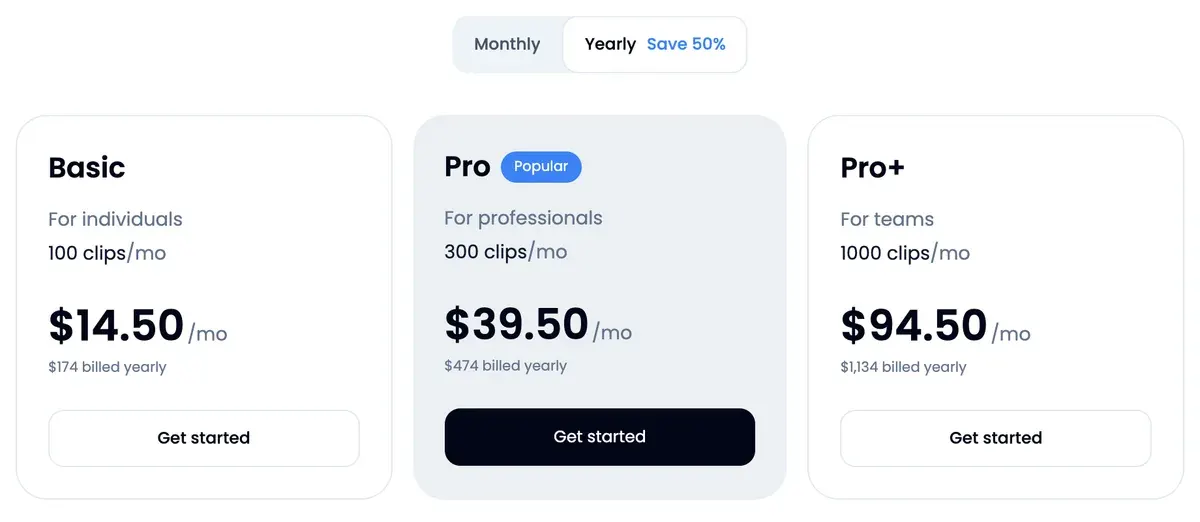
- Klap bills per clip. Basic works out at $0.29 a clip billed monthly, if all 100 clips are used, whatever the source length.
- OpusClip bills per minute of source video. Starter is $15 a month for 150 minutes, and its free plan’s clips are for “non-commercial use” only. Its plans sit on OpusClip pricing.
- CapCut is the manual route the OpusClip blog names for cutting, captions and reframing. It has a free plan.
- Spikes Studio imports Twitch, Kick and YouTube streams, but its terms grant use of the service “solely for your own personal and non-commercial use”.
- Munch Studio now sells itself as a social media manager. Its cheapest plan, Essential, is $68 a month for 500 input minutes with social posting tools bundled in, so a clipper pays for tools a campaign does not need.
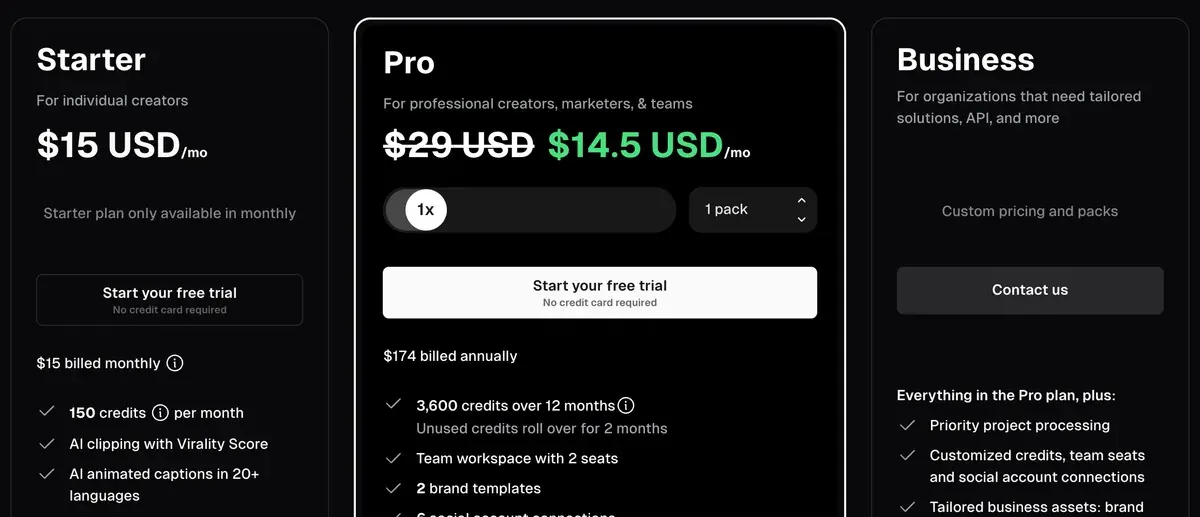
Run the numbers before you pay. At $1 per 1,000 views, you keep $0.90 after the fee, so a Klap Basic clip at $0.29 pays for itself at about 322 views (0.29 / 0.90 x 1,000). A $2 minimum keeps the same clip unpaid until 2,000 views, about six times as many.
Every AI clipping tool above sits side by side on the best AI clipping tools. The two big names meet head to head on Klap vs Opus Clip.
Platform rules that can kill a clip account
Campaign money comes from the brand, so YouTube’s rules do not stop a payout. They can stop the posting channel from earning YouTube ad revenue, and YouTube can remove monetisation from the whole channel. NPR also reports platforms acting against pages that post many duplicate clips.
YouTube’s monetisation policies bar “channels that repurpose content that’s already on YouTube or another online source without adding significant original commentary, substantive modifications, or educational or entertainment value.”
Permission is no defence: “This policy applies even if you have permission from the original creator.” The list of barred examples includes “Clips of moments from your favorite show edited together with little or no narrative”.
Reused content
Definition. Reused content refers to channels that repurpose content that’s already on YouTube or another online source without adding significant original commentary, substantive modifications, or educational or entertainment value.
Not eligible. Content downloaded or copied from another online source without any substantive modifications.
Permission. This policy applies even if you have permission from the original creator.
TikTok’s integrity rules say “You should only post content you created or have the right to share.” Unoriginal or reused material “without anything new” is ineligible for the For You feed, the main recommendation stream.
Integrity and authenticity
Rights. You should only post content you created or have the right to share.
For You feed. Content is also ineligible for the FYF if it includes unoriginal or reused material without anything new.
TikTok’s March 2024 launch post for its Creator Rewards Program says it rewards “high-quality, original content that is over a minute long”.
What a clipping agency does
A clipping agency runs campaigns for a brand, creator or label. It writes the brief, recruits and manages freelance clippers, checks quality, chases weak posts and reports results. It costs a brand more than running a campaign directly (OpusClip blog, Whop Content Rewards).
Agencies also hire. NPR names one called Clipping, and quotes a clipper who says he runs a network of 40,000 freelancers. Content Rewards says 200 agencies use its platform. A clipping job means joining one of these networks or a marketplace campaign and clipping to its briefs.
What Klap offers clippers
Klap has a page aimed at clippers and Content Rewards campaigns (Klap for clippers). Its plans count clips, “so you know your cost before you start”.
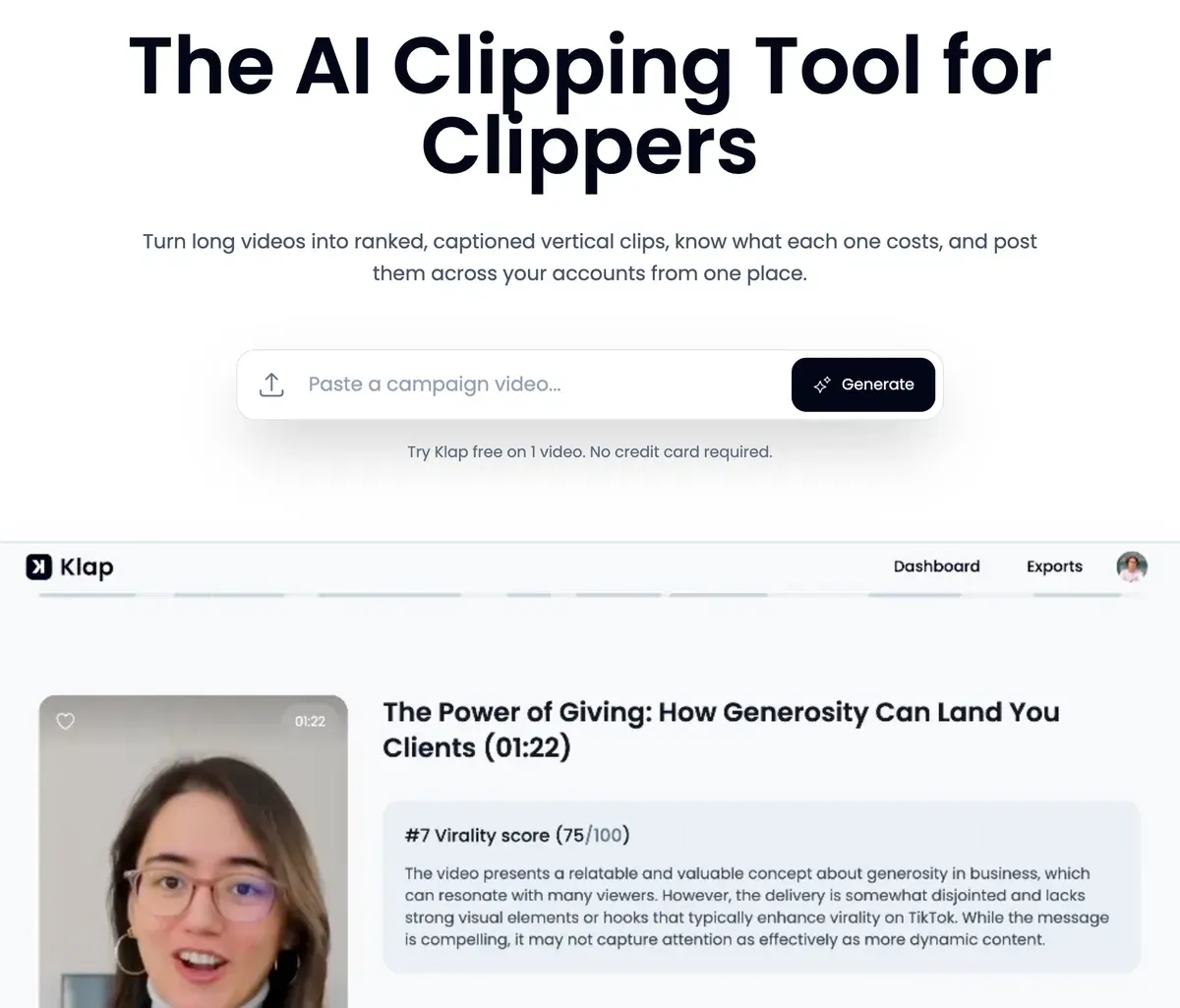
It states about 8 clips from a 10 to 30 minute video and 26 from a 1 to 2 hour one.
The page lists a prompt box that picks moments by topic and clip length targets. It adds gaming and split layouts, captions in 99+ languages and scheduling to several accounts per platform.
The free trial covers 1 video, and downloading or posting needs a paid plan. Klap’s own rights line fits campaigns: “Clip footage you have the right to use. Clipping campaigns give that permission for the videos in their brief.”
Klap is the wrong pick if you only clip a few short sources a month. CapCut’s free plan does that work by hand, and OpusClip Starter is $15 a month for 150 source minutes.
The plans, the yearly saving and what each clip costs are on Klap pricing.
Questions about clipping for money
How much do you make clipping per 1,000 views?
Content Rewards says campaigns that fill mostly pay between $0.80 and $2.00 per 1,000 views, before the 10% fee. Rates outside that range exist.
Is Whop clipping still on Whop?
Content Rewards started on Whop and now runs its own app at contentrewards.com. Whop still processes the withdrawals.
Do you need permission to clip someone’s video?
Yes. A campaign’s brief gives permission for its source videos. YouTube can still refuse ad revenue on clips that add little, even with permission.
What is a clipping agency?
A company that runs clipping campaigns for brands or creators and manages a network of freelance clippers to post them.
Sources
- NPR (Bobby Allyn), via KJZZ: The clipping economy: how short-form video clippers are overrunning the internet, published 12 May 2026; rates of 1, 25 and 0.50 dollars per 1,000 views; self-reported earnings; platforms acting against duplicate clips. Checked
- Whop docs: Content Rewards, brand sets the rate per 1,000 views, a minimum and a maximum payout; pays only after approval; worked examples. Checked
- Content Rewards: Content Rewards for creators, four payout models, the flat 10% creator fee, rejection reasons, live campaign rates. Checked
- Content Rewards: Content Rewards for brands, campaigns start at 1,000 dollars of budget; brand fee; vendor counts of agencies and creators. Checked
- Content Rewards: Clipping payouts explained, published 9 November 2026; typical rates, median of 707 campaigns, minimum and cap examples, 30-day earning window, withdrawals. Checked
- OpusClip blog (Parker Miller): Whop Content Rewards, published 12 August 2026; rate ranges by campaign type; what a clipping agency does; CapCut as the manual editor. Checked
- YouTube Help: Channel monetization policies, reused content and inauthentic content; applies to the whole channel, even with permission. Checked
- TikTok Community Guidelines: Integrity and authenticity, post only content you created or have the right to share; unoriginal or reused material is ineligible for the For You feed. Checked
- TikTok Newsroom: Introducing the new Creator Rewards Program, published 18 March 2024; rewards original content over a minute long. Checked
- Klap: Klap for clippers, page marked Updated November 2026; cost per clip by plan, clips per source length, rights line for campaign footage. Checked

Alexandre S.
Alexandre S. is a creative ad strategist and copywriter with ten years' experience in digital marketing across multiple channels.
Related pages
-
 Guide How much do UGC creators cost?
UGC creator rates as marketplaces publish them, the fees on top and the usage rights each includes, beside AI’s cost per ad. Checked 2 October 2026.
-
 Guide How to make money with an AI influencer
AI influencers earn from brand deals, affiliate links, content sales, creator programmes and products. What each needs and costs. Checked 24 Oct 2026.
-
 Guide YouTube Shorts ads
YouTube Shorts ads run through six Google Ads campaign types. Which one lets you pick Shorts, the specs and the Reel margin trap. Checked 7 November 2026.
-
 Pricing OpusClip pricing
OpusClip Pro costs $29 a month, or $14.50 a month billed yearly ($174), for 300 credits, 1 per source minute. Every plan and the trial, checked 16 Nov 2026.


