How to make money with AI UGC
You make money with AI UGC by selling finished ads to brands, and your tool’s client-work clause decides whether you can. A freelancer or agency writes the script, generates the video and delivers files the brand runs.
| Tool and plan | Client work | Resale of videos | Clause | Terms dated |
|---|---|---|---|---|
| HeyGen Free | Not allowed | Not allowed | s.4 | 23 Jul 2026 |
| HeyGen Creator, Pro, Business | Conditional: clients may not use your account | Conditional | s.2, s.3, s.5 | 23 Jul 2026 |
| Arcads, all plans | Unclear | Unclear | 5, 13.3.1 | 22 Sep 2026 |
| Captions app plans | Unclear: Mirage Content needs consent | Unclear | 2.2, 3.1(xiv) | 4 Sep 2025 |
| Captions on web | Conditional: clients can be invited | Unclear | 2.1, 2.2 | 29 Sep 2025 |
| JoggAI, all plans | Conditional | Conditional | Termination | Not dated |
| Creatify Standard, Pro, Ultra, Business | Conditional | Conditional | 7.2, 7.3 | 23 Sep 2024 |
| Creatify Free | Unclear | Unclear | 1 | 23 Sep 2024 |
| Argil, all plans | Unclear | Conditional | 6.7.1, 5.2.3.1, 12.2 | Not dated |
| MakeUGC, all plans | Conditional | Conditional | 3.2(a) to (c), Fair Use Policy | 22 Oct 2026 |
| Synthesia, all plans | Conditional | Unclear | Authorized Users | 20 Jul 2026 |
Scroll sideways for all 5 columns

Can you sell AI UGC ads to clients?
On a paid plan of most of these tools, yes, with conditions the terms spell out. On one free plan, no. HeyGen’s terms (23 July 2026, s.4) say Free Plan output “may not be sold, sublicensed, redistributed, monetized, or used in connection with commercial activities, advertising, client work”.
On its paid plans, s.2 lets “employees, affiliates and contractors” use your account, but “you may not authorize third parties to use the Services”. Deliver the files; never share the login.
Arcads grants “a non-exclusive, personal and non-transferable license on the Video” (terms 13.3.1, 22 September 2026). Clause 5 contemplates clients acting “on behalf of another professional”. The terms do not say whether an agency may hand videos to its client for the client’s own use.
Captions’ app terms (3.1(xiv)) bar “reselling or making any commercial use of the Services including the Mirage Content except as authorized hereunder without our prior written consent”. Mirage Content includes its AI actors.
The web terms (2.1) let you invite users “from outside your organization”, such as a client, and their breaches count as yours.
Creatify’s terms (7.3) cover “any personal, private, or commercial use you make or permit to be made of the Assets”, which contemplates use by others.
Synthesia’s terms (20 July 2026) count “an employee, contractor or client of Customer” as an Authorized User. Stock avatars stay licensed to you alone, and its Acceptable Use Policy bars them in paid social ads without Synthesia’s written consent.
Argil’s terms say the Services are “exclusively intended for the personal use of the User, except where access to the Services is via an API” (6.7.1). Clause 5.2.3.1 contemplates companies creating avatars on behalf of third parties. The terms do not reconcile the two.
MakeUGC’s terms (22 October 2026) let you keep output “including after your Subscription ends” if you kept to the terms and your fees were paid in full when it was made (3.2(a)). Any right not assigned comes as an “assignable and sublicensable licence” (3.2(c)).
Its older Fair Use Policy (11 July 2025) still licenses outputs only with “a valid and active paid subscription”, and the terms’ entire-agreement clause (20.4) does not list that policy.
The same policy says content “must not be sold, sublicensed, or used in external platforms without the appropriate subscription level or licensing agreement in place”. You also indemnify MakeUGC for output you give to clients.
Meta Advantage+ creative is the one ad-platform tool here, outside the table. Its output can run in a client’s Meta ads, but “Use or publication of Output outside of Meta’s platforms is unauthorized” (Meta’s terms, 6 May 2024).
What happens to delivered videos if your tool account ends
Termination clauses reach videos you have already sold. If JoggAI ends your account for a breach, you must stop using and delete all outputs. HeyGen’s s.5 says the same. Neither clause carves out files a client already runs.
Creatify’s terms and its help-centre FAQ point different ways. Clause 6.2 says a breach means “all rights granted to you shall revert to Creatify”, and 7.7 ends all granted rights on any termination. The FAQ (updated 20 September 2026) says “You own all of your creatives, even after your plan ends.”
MakeUGC’s terms keep paid-for output yours after a plan lapses (3.2(a)), unless MakeUGC ends the account for breach, trial abuse or non-payment (10.3). Its older Fair Use Policy still ties the licence to an active subscription. Put the client’s rights in writing. Arcads’ licence is personal and non-transferable from the start (13.3.1).
Build these into the client contract: who holds the account, what happens if it ends, and who removes ads if a licence is withdrawn. Every tool and plan is on rights by plan.
The duties your client takes on
The brand that runs the ad is the advertiser, and the advertiser’s rules follow the files. The FTC’s rule on fake reviews and testimonials (16 CFR 465.2) bars testimonials from people who do not exist or never had the experience described. AI UGC legal rules quotes it.
A script line such as “I’ve used this every day for a month”, spoken by an AI actor, describes an experience nobody had.
New York and California have passed laws requiring a disclosure when an ad uses a synthetic performer. New York’s applies from 9 June 2026, California’s from 1 January 2027. Meta and TikTok each label AI content. The wording is on AI disclosure rules.
Pricing your own work: your cost per ad
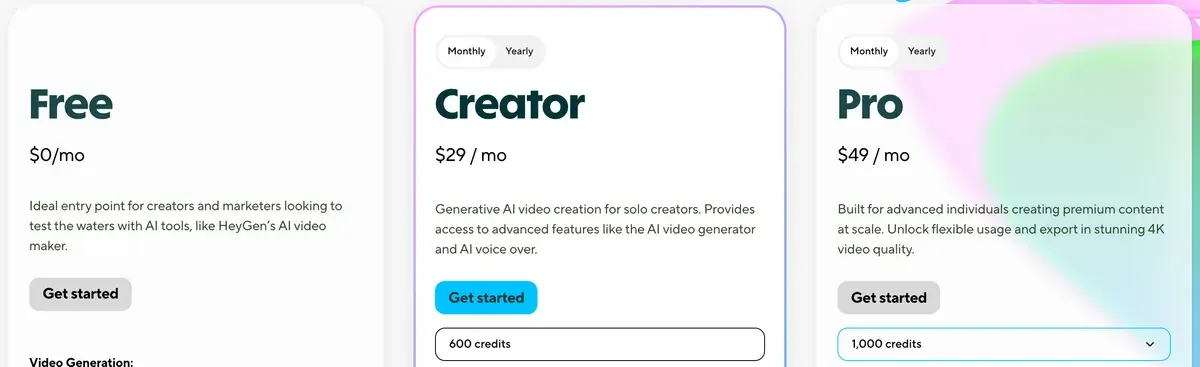
Your tool cost per ad is the floor under any price you quote. At list price, one 30-second avatar video costs $0.10 to $1.16 on HeyGen’s Creator plan ($29 a month), depending on the avatar model, if every credit is used. HeyGen prices checked . It costs $2.73 on Creatify Standard ($15 a month), if every credit is used, checked .
Retries, hooks and versions multiply that figure. AI UGC price per ad has seven tools’ rates, and the AI ad cost calculator works out a month at your own volume. What a human creator charges for the same ad is on UGC creator rates.
What AI-made creators earn on their own accounts is gathered, source by source, in what virtual influencers make.
Building an AI UGC portfolio
Make spec ads on a plan whose terms allow commercial use. HeyGen Free output may not be used for “advertising”, so a spec ad made there cannot later become a client’s ad. Creatify’s terms say Free Tier users “have limited rights” without listing them.
Label spec work as spec. A portfolio piece shown as a campaign for a brand that never hired you is a claim a client can check. Anyone starting out can build the first spec ad with how to make AI UGC ads, then compare tools on the AI UGC hub.
If you are weighing human work too, what is a UGC creator? sets out what the job pays and how the AI version differs.
Running your own AI character as a creator is another way to earn: how to make money with an AI influencer sets out the routes and the costs.
AI video agency costs, compared shows what an agency charges and when a tool wins.
AI video tools for marketing agencies compares the plans that allow client work.
Sources
- HeyGen: HeyGen Terms of Service (23 July 2026), s.2 on who may use your account, s.3 on output assignment, s.4 on Free Plan output, s.5 on termination. Checked
- Arcads: Arcads terms (22 September 2026), 5 on acting for another professional, 13.3.1 on the personal, non-transferable video licence. Checked
- Mirage: Captions Terms and Conditions (4 September 2025), 2.2 on output, 3.1(xiv) on commercial use of the Services and Mirage Content. Checked
- Mirage: Captions on Web Terms (29 September 2025), 2.1 on inviting users from outside your organisation. Checked
- JoggAI: JoggAI Terms of Use, Output assignment, and deletion of all outputs on termination for breach. Checked
- Creatify: Creatify Terms of Service (23 September 2024), 6.2 reversion on breach, 7.3 use you permit others to make, 7.7 rights ending on termination. Checked
- Creatify: Creatify help-centre FAQ (updated 20 September 2026), Says you own your creatives after your plan ends. Checked
- Argil: Argil general terms and conditions, 6.7.1 personal use except via the API, 5.2.3.1 avatars created on behalf of third parties. Checked
- MakeUGC: MakeUGC Terms of Service (22 October 2026), 3.2(a) ownership after the subscription ends if fees were paid in full; 3.2(c) assignable and sublicensable licence; the Fair Use Policy of 11 July 2025 ties it to an active paid subscription and bars selling content without the right subscription level. Checked
- Synthesia: Synthesia Customer Terms of Service (20 July 2026), Authorized Users include a client of the customer; Synthesia Content licensed non-transferably. Checked
- Meta: Meta generative AI ad creative terms (6 May 2024, archived), Output use outside Meta’s platforms unauthorised. Checked
What changed on this page
- MakeUGC’s terms of 22 October 2026 let you keep output after your subscription ends if your fees were paid in full when it was made (3.2(a)); its Fair Use Policy of 11 July 2025 still ties the licence to an active subscription.
- Updated for the 16 October 2026 price changes (Creatify’s new plan line-up): figures on this page follow.

Alexandre S.
Alexandre S. is a creative ad strategist and copywriter with ten years' experience in digital marketing across multiple channels.
Related pages
-
 Alternatives MakeUGC AI alternatives
MakeUGC publishes no credits per video. Alternatives compared on the published cost of a 30-second ad and on trial and refund rules, checked 2 October 2026.
-
 Compare HeyGen vs Arcads for UGC ads
HeyGen publishes credits a minute by avatar; Arcads bills 800 credits per started minute or per video, with no public price. Actor terms and exits, checked 2 Oct 2026.
-
 Compare Creatify vs HeyGen
A 30-second avatar ad costs $2.73 on Creatify Standard and $0.10 to $1.16 on HeyGen Creator, if every credit is used. Ad terms checked 2 October 2026.
-
 Calculator AI vs human UGC cost calculator
Set an AI tool’s plan against a creator’s fee per video to see what a month of UGC ads costs each way. Plan prices from official pages, formula shown.


